Your blood oxygen is a smoke alarm
On this page
- The map
- Why does a healthy alarm stay quiet?
- How did a noisy ear sensor become the light on your wrist?
- False alarm one: you fell asleep
- False alarm two: you went up a mountain
- When the alarm stays quiet
- When the beeping is a pattern
- What sets it off, ranked
- When you smell smoke
- Why are you here?
- What’s changed lately?
- What the evidence doesn’t show
- The simple plan
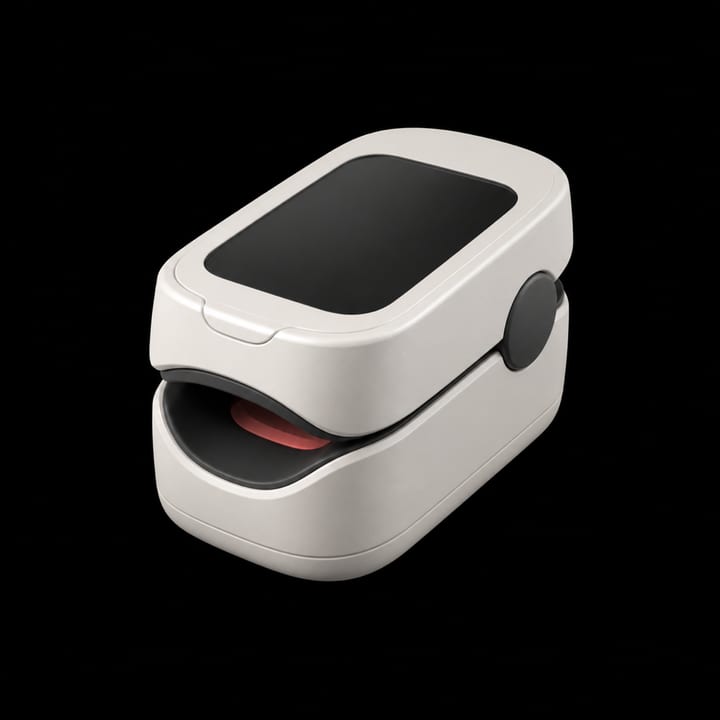
Treat your blood oxygen like a smoke alarm. When you’re healthy it stays quiet near the top, 95 to 100 awake, and there’s no higher score to chase. It goes off for harmless reasons, like sleep, a trip up a mountain or a cold finger, and now and then it stays quiet when something is wrong. Learn its three lines, 92, 88 and 911, judge a low night against your own usual nights, and trust how you feel over the number.
Did your watch show you an 89 this morning? Most people meet this number that way, on a phone in bed, or on a finger clip they bought the week they had COVID. It looks like a grade, so people try to push it up to 100 and panic when it dips. A smoke alarm has one job, which is to warn you, and to do that job it has to stay quiet nearly all the time. Your blood oxygen works the same way.
What we’d do
Stop comparing yourself with 100. Anything from 95 up is the same healthy blood, and a dip at night is built in. Compare a low night with your own usual nights on one device, at the same elevation, and give it three nights before you decide anything.
Remember three lines. Awake and resting, call your doctor at 92 or lower and get medical care now at 88 or lower. Trouble breathing, chest pain, new confusion, or gray or blue lips means 911, whatever the number says.
If your skin is darker, a finger oximeter that shows 88 to 95 can hide a lower true number, so lean on how you feel more than on the screen. When the alarm stays quiet has the numbers.
Your body keeps the number up on its own. Your brain sets your breathing minute by minute, and your red blood cells hold on to oxygen across a huge range of air. If you want to help it the natural way, and you can, the moves are plain. Keep drinks away from bedtime, sleep on your side if you snore, lose weight if you snore and carry extra, don’t smoke, and go up mountains slowly. How can I raise my blood oxygen naturally? has each one with its numbers.
The map
- What the number means. Why healthy blood sits near full, and why 95 and 99 are the same blood.
- How a watch sees oxygen through your skin. Two colors of light and an accident in 1972.
- What’s normal awake. The 95 to 100 range and the lines under it.
- What’s normal asleep. The dip that’s built in, and the three numbers a watch shows.
- What happens at altitude. Less oxygen in every breath, and why symptoms decide up high.
- How far to trust the number. Where watches and finger clips miss, and who they miss most.
- When a low night means a sleep study. One beep against a pattern.
- What changes your number, and by how much. Elevation, alcohol, age and weight, ranked.
- When a low number is an emergency. The signs that come before any number.
- What’s changed since 2024. Apple’s oxygen feature leaving and coming back, a sleep apnea alert, the first apnea medicine and a skin tone rule.
Why does a healthy alarm stay quiet?
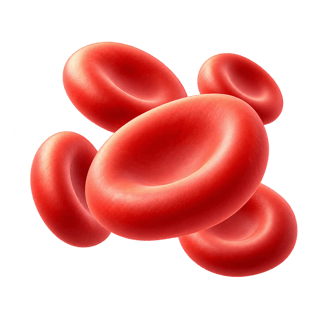
Your red blood cells are packed with hemoglobin, and each hemoglobin molecule has four seats for oxygen. Your blood oxygen number is the share of those seats that are filled. In healthy people breathing room air at sea level, a blood test finds 96 to 98 of every 100 seats taken.
The seats fill as a team. Every oxygen that sits down makes it easier for the next one, so the seats stay full until the oxygen around them falls a long way, and then they empty fast. Doctors draw it as a curve with a long flat top and a cliff at the end. You can watch the flat top at work on a trip to Denver.
- Sea level
- Denver
- 8,000 ft
- 10,000 ft
- 14,957 ft
Bars start at 50. Blood oxygen up to 8,000 ft is a typical watch night for a 40-year-old (33,080 Apple Watch wearers). At 14,957 ft it's a blood test in 13 lowlanders after a fast climb.
Each breath in Denver carries about 82% of the oxygen it does at sea level, and a typical night on a watch drops by only about 2 points. That’s why 95 and 99 are the same healthy blood, and why a higher number isn’t a better one. What the number means has the curve, and a healthy blood oxygen is 100% is the myth it answers.
It’s also why deep breaths can’t push a healthy number up. At 97 there are three empty seats in every hundred. Your brain sets your breathing mostly by carbon dioxide, which it uses to keep your blood’s acid balance steady, and the oxygen sensors in your neck switch on when oxygen falls. Breathing harder mostly blows off carbon dioxide. Deep breaths will raise your blood oxygen has our side of it, and breathwork.guide explains why carbon dioxide runs your breathing, what breathing hard really does and what happens in a breath hold.
How did a noisy ear sensor become the light on your wrist?
In 1972 Takuo Aoyagi, an engineer at Nihon Kohden in Tokyo, was trying to measure how much blood the heart pumps. His method followed a dye through the blood with an ear clip that shone red and infrared light through the earlobe. Every heartbeat put a wobble in the signal, so he balanced the red against the infrared to cancel it out. Whenever the oxygen level changed, the balance broke. Aoyagi realized the wobble he was fighting was the measurement, because the pulsing part of the light comes from fresh blood arriving with each beat.
Minolta sold the idea from about 1978, and pulse oximeters spread around the world in the mid-1980s. A finger clip shines its light through you, and a watch bounces it back from your wrist, which costs it accuracy. How a watch sees oxygen through your skin has the rest, and why does my watch show a different number than my oximeter? answers the question it raises.
False alarm one: you fell asleep
In your sleep you breathe a little less deeply, so your number dips, and that’s built in. In 33,080 Apple Watch wearers the night ran about 0.8 points under the day, lowest around 1 am and highest around 11 am. The lowest moment of a night goes further. In 350 people with normal sleep studies, the night’s lowest point averaged about 90, and most landed between about 84 and 97.
An 88 at the kitchen table means get medical care now. An 88 as the lowest point of a night sits inside the range healthy sleepers reach. The dot marks the healthy sleepers' average, about 90.
Most of the fear people bring to this site comes from mixing up those three numbers. A watch can show an overnight average, a lowest point or a single sample, and an 88 means something different on each. What’s normal asleep has all three, is it normal for oxygen to drop to 88 while sleeping? answers the most common worry, anything under 95 means something’s wrong is the myth behind it, and every number from 85 to 100 shows yours all three ways.
A drink sets the alarm off too. In 14 trials, alcohol before bed lowered the night’s lowest point by about 1.25 points, and in an older study of 20 healthy men the extra dips were still there the next night with no more drinking. Does alcohol lower your blood oxygen? has the numbers, and alcohol.guide follows the night after a drink.
False alarm two: you went up a mountain
Air is about 21% oxygen at every elevation. What changes as you climb is the pressure, so each breath carries less. At 10,000 feet it’s about 69% of the oxygen you’d get at sea level.
Up to about 8,000 feet your number barely notices. In the Apple Watch study, every kilometre (3,300 feet) higher people lived took about 1.2 points off a typical night, and the straight line held to about 8,200 feet, where the authors saw it bend. Past that you’re over the cliff. In 13 lowlanders who climbed fast to 14,957 feet, a blood test found about 75%, and a Garmin on their wrists showed about 85.
Up there the number stops telling you whether you’re okay. People with altitude sickness usually show a number that’s normal for the altitude, the CDC says, so symptoms decide.
The ski towns in a 1993 Colorado study, 6,300 to 9,700 ft: 1 in 4 of 3,158 visitors got altitude sickness, and people who lived below 3,000 ft were 3.5 times as likely to.
Pacing where you sleep is what protects you. From low ground, the CDC says to keep the first night under 9,000 feet, then above 9,800 feet to sleep no more than 1,650 feet higher each night, with an extra night for every 3,300 feet. A headache with nausea, tiredness or dizziness after a climb means don’t go higher, and go down if it gets worse. What happens at altitude has the details, is my trip going up too fast? checks yours, and your oxygen number tells you if you have altitude sickness is the myth that gets people in trouble. If you live up high, what’s a normal oxygen level in Denver? has your numbers.
When the alarm stays quiet
A smoke alarm with a dying battery is the dangerous one, and a pulse oximeter can be that alarm. Oximeters and watches tend to show too high when oxygen is low, which is the wrong direction to be off.
In 2020, doctors at the University of Michigan compared hospital patients’ finger oximeter numbers with blood tests taken at the same time. When the oximeter showed 92 to 96, true oxygen was under 88 for 3.6% of White patients’ measurements and 11.7% of Black patients’, about three times as often.
3.6%White patients' measurements
11.7%Black patients' measurements
The dots are the University of Michigan's 2020 hospital measurements, rounded to whole dots. The bars come from 9 healthy young adults breathing low-oxygen air in a Duke lab. Both devices tended to show too high.
Watches miss by more than finger clips. In 9 healthy young adults breathing low-oxygen air in a lab at Duke, an Apple Watch Series 7 was off by about 5.8 points once true oxygen fell under 88, and a medical finger oximeter by about 3.5. Apple says its Blood Oxygen measurements aren’t meant for medical use.
The fix is the same for everyone. If your number sits between 88 and 95 and you feel unwell, go by how you feel. Warm your hands, take off dark nail polish and sit still before you trust a number. How far to trust the number explains why skin tone, cold and movement change the light, are pulse oximeters less accurate on darker skin? has the studies, and two myths cover the rest, your watch is as good as a medical oximeter and a normal number means you’re fine.
When the beeping is a pattern
One beep at 3 am is a normal night. A beep every night is a different story. In sleep apnea, breathing keeps stopping or turning shallow during sleep, and each pause can pull your oxygen down. In a US estimate from 2007 to 2010, moderate to severe sleep-disordered breathing affected about 1 in 10 men aged 30 to 49 and 1 in 6 aged 50 to 70, and 3% and 9% of women the same ages.
The signs doctors ask about come before any number. They’re loud snoring, someone seeing you stop breathing, feeling sleepy in the day after a full night, and high blood pressure. A watch can point you toward a test. Apple’s sleep apnea notification, which the FDA cleared on September 13, 2024, uses the watch’s motion sensor, which Apple describes separately from the Blood Oxygen feature. In the study behind it, with 1,499 people enrolled, it alerted 66% of those who had moderate to severe apnea, and 98.5% of those without it got no alert. An alert is a strong reason to get tested, and a quiet watch doesn’t rule apnea out.
The three-night check turns beeps into a pattern you can bring to a doctor. Wear the same device the same way, at the same elevation, with drinks kept the same. If your lowest number keeps dropping under 90, or someone has seen you stop breathing, ask about a sleep study. When a low night means a sleep study has the signs and the tests, what does the Apple Watch sleep apnea notification mean? covers the alert, and snoring is just noise and one low night means you have sleep apnea are the two myths at either end.
Weight is one of the biggest things you can change. Can losing weight help sleep apnea? has the trial, and bodyfat.guide has the GLP-1 medicines. High blood pressure is one of the signs, and bloodpressure.guide checks yours. Taping your mouth shut at night is the trend people ask about, and breathwork.guide looks at what mouth taping does.
What sets it off, ranked
- Alcohol before bedon the lowest point of the night 1.25
- Sleeping 3,300 ft (1 km) higheron the night average, up to about 8,200 ft 1.17
- 20 more years of ageon the night average 0.86
- Alcohol before bedon the night average 0.6
- 10 more points of BMIon the night average 0.56
Elevation, age and BMI from 33,080 Apple Watch wearers. Alcohol from 14 trials with 422 people. Each one is measured on its own, so they don't add up into a total.
Elevation comes first by a long way. Living a kilometre higher takes as much off a typical night as about 27 years of getting older. Alcohol comes next, and age and weight barely register. Sleeping on your back counts if your airway closes. In 12,036 sleep-center patients with apnea, two in three were worse on their back (does sleeping on your back lower your oxygen?). What changes your blood oxygen, and by how much has each one with its small print, and how can I raise my blood oxygen naturally? turns them into what to try.
When you smell smoke
If you smell smoke, you get out, whatever the alarm is doing. Your body has the same rule. Call 911 for trouble breathing, chest pain or pressure that doesn’t go away, new confusion, being unable to stay awake, or lips, nail beds or skin that look pale, gray or blue, whatever the number says. Those are the CDC’s emergency signs.
For a number you trust, taken awake and sitting still at your usual elevation, the US lines come from MedlinePlus, the National Library of Medicine’s health site. Anything from 95 to 100 is normal. At 92 or lower, call your doctor. At 88 or lower, get medical care now. When a low number is an emergency has the full list, when should I go to the ER for low oxygen? and what are the symptoms of low blood oxygen? answer the two questions people type, and if you’re checking because you’re sick, start with should I check my blood oxygen when I’m sick?. For chest pain during a workout, exercise.guide has what to do.
Why are you here?
People come to blood oxygen for a lot of different reasons. Some woke up to a low night on their watch. Some bought a finger clip when they caught a cold, or are packing for a ski trip, or share a bed with someone who hears them stop breathing. Pick yours.
-
 A number to look upWhat 96, 94, 92 or 88 means awake and asleep
-
 My watch showed a low nightWhy it dips in your sleep, and when a dip is normal
-
 I'm sick and checking itA cold, the flu or COVID, and the numbers that mean call
-
 A trip somewhere highSki towns, Cusco or a trek, paced by where you sleep
-
 Snoring, or pauses in my sleepWhen a low night is a reason to ask for a sleep study
-
 My watch sent a sleep apnea alertWhat it measured, how often it catches apnea, what to do
- Is my watch right?How far a watch can be off, and where it fails
-
 I live up highDenver and other high towns, awake and asleep
-
 My skin is darkerWhy oximeters can show too high, and what to do about it
- Buying an oximeter or a watchWhat a cheap finger clip is good for, and its limits
-
 Checking on a parentWhat age does to the number, which is very little
-
 Drinks before bedWhat a drink does to tonight and tomorrow night
-
 I want to raise it naturallyWhat your body does on its own, and what helps at night
-
 I smoke or vapeWhy smoke can make the number look better than it is
-
 Fitness and VO2 maxTwo oxygen numbers that mean very different things
- I want the whole chartNormal by age, asleep and by elevation, in one place
What’s changed lately?
Blood oxygen has had a busy two years. Apple started selling its watches in the US without the Blood Oxygen feature on January 18, 2024, after a patent ruling, and brought it back for Series 9, Series 10 and Ultra 2 owners on August 14, 2025, calculated on the iPhone. The FDA cleared Apple’s sleep apnea notifications in September 2024 and approved the first medicine for sleep apnea in December 2024. In January 2025 it proposed tougher testing of medical oximeters across skin tones, and we haven’t found a final version yet. What’s changed since 2024 has the dates.
What the evidence doesn’t show
- That the night bands fit every watch. They come from one model, the Apple Watch Series 6, in US wearers, and they describe a person’s usual nights. One night can land outside them.
- How most rings and watches do under low oxygen. For Oura, WHOOP, Fitbit, Pixel Watch and Samsung we haven’t seen a published test. Which device? shows what each one records.
- That a watch can diagnose anything. Apple says its Blood Oxygen measurements aren’t meant for medical use, and the US sleep medicine guideline says questionnaires and clinical tools alone shouldn’t be used to diagnose sleep apnea. A sleep study does that.
- What’s normal for children. Children’s numbers differ, so ask your child’s doctor.
The simple plan
Here’s how we’d live with this number if we were healthy and wanted to stay that way.
- Let your body do its job, and help it the natural way. If you want to and you can, keep drinks away from bedtime, sleep on your side if you snore, lose weight if you snore and carry extra, don’t smoke, and go up mountains slowly. From 95 up there’s nothing to raise. How can I raise my blood oxygen naturally? has the list.
- Know the three lines. Awake and resting, 92 or lower means call your doctor and 88 or lower means get medical care now. Trouble breathing, chest pain, new confusion, or gray or blue lips means 911 at any number.
- Pick one device and wear it to bed. The same watch or ring, snug, on the same wrist or finger, and compare it only with itself. Which device? shows what yours records.
- Learn your usual nights. After a couple of weeks you’ll know your normal average and your normal lowest point. Your number, explained shows where they sit against people like you.
- When a night looks low, look for the reason first. Check the usual suspects, a drink near bedtime, sleeping on your back or sleeping higher than usual. Then give it the three-night check.
- Act on a pattern. If your lowest number keeps dropping under 90, someone has seen you stop breathing, or you snore loudly and you’re sleepy by day, ask your doctor about a sleep study.
- Going high? Plan where you sleep. Keep the first night under 9,000 feet from low ground and pace the rest with the trip check. Up there, symptoms decide.
- Let Gyroscope keep the log. Writing down every morning’s number gets old fast, and Gyroscope does it for you.
23 sources
- MedlinePlus, Pulse Oximetry, US National Library of Medicine, updated September 12, 2024medlineplus.gov
- CDC, Symptoms of COVID-19, emergency warning signscdc.gov
- Shapiro I and others, Pulse oximetry values from 33,080 participants in the Apple Heart and Movement Study, npj Digital Medicine, 2023pmc.ncbi.nlm.nih.gov
- Gries RE and Brooks LJ, Normal oxyhemoglobin saturation during sleep: how low does it go?, Chest, 1996europepmc.org
- Severinghaus JW, Takuo Aoyagi: discovery of pulse oximetry, Anesthesia and Analgesia, 2007europepmc.org
- Collins JA and others, Relating oxygen partial pressure, saturation and content: the haemoglobin-oxygen dissociation curve, Breathe, 2015pmc.ncbi.nlm.nih.gov
- Guyenet PG and Bayliss DA, Neural control of breathing and CO2 homeostasis, Neuron, 2015pmc.ncbi.nlm.nih.gov
- NASA Glenn Research Center, Earth Atmosphere Model, metric unitsgrc.nasa.gov
- CDC Yellow Book, High-Altitude Travel and Altitude Illnesscdc.gov
- Honigman B and others, Acute mountain sickness in a general tourist population at moderate altitudes, Annals of Internal Medicine, 1993europepmc.org
- Schiefer LM and others, Validity of peripheral oxygen saturation measurements with the Garmin Fenix 5X Plus wearable device at 4559 m, Sensors, 2021europepmc.org
- Sjoding MW and others, Racial bias in pulse oximetry measurement, New England Journal of Medicine, 2020pmc.ncbi.nlm.nih.gov
- Jiang Y and others, Performance of wearable pulse oximetry during controlled hypoxia induction: instrument validation study, JMIR Formative Research, 2026pmc.ncbi.nlm.nih.gov
- Apple Support, About Blood Oxygen on Apple Watch, checked 2026-11-14support.apple.com
- Kolla BP and others, The impact of alcohol on breathing parameters during sleep: a systematic review and meta-analysis, Sleep Medicine Reviews, 2018europepmc.org
- Taasan VC and others, Alcohol increases sleep apnea and oxygen desaturation in asymptomatic men, American Journal of Medicine, 1981europepmc.org
- Peppard PE and others, Increased prevalence of sleep-disordered breathing in adults, American Journal of Epidemiology, 2013europepmc.org
- Chung F, Abdullah HR and Liao P, STOP-Bang questionnaire: a practical approach to screen for obstructive sleep apnea, Chest, 2016europepmc.org
- US Food and Drug Administration, 510(k) K240929, Sleep Apnea Notification Feature, September 13, 2024accessdata.fda.gov
- Rosa CFA and others, Analysis of positional obstructive sleep apnea features in 12,000 patients at a sleep center, Sleep and Breathing, 2026europepmc.org
- Kapur VK and others, Clinical practice guideline for diagnostic testing for adult obstructive sleep apnea, Journal of Clinical Sleep Medicine, 2017europepmc.org
- STAT, Apple to sell watches without blood oxygen feature amid Masimo patent dispute, January 18, 2024statnews.com
- Apple Newsroom, An update on Blood Oxygen for Apple Watch in the US, August 14, 2025apple.com