
What does the Apple Watch sleep apnea notification mean?
On this page
It means your watch’s motion sensor kept seeing signs of disturbed breathing in your sleep over a 30-day stretch. Apple says the feature isn’t meant to diagnose sleep apnea. Take the report to your doctor and ask about a sleep study.
What we’d do
Treat it as a good reason to get tested, and don’t wait for your blood oxygen to look bad first. Export the PDF from the Health app, ask whoever sleeps near you whether they’ve heard you snore or stop breathing, and bring both to your doctor.
How does it work?
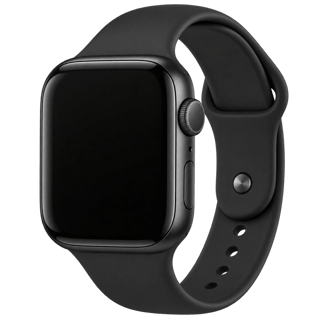
Apple describes it this way. Each night you wear the watch to bed, its accelerometer (the motion sensor) looks for breathing disturbances, and the night is marked Elevated or Not Elevated. Every 30 days, the watch looks back. If the Elevated nights keep showing up, you get the notification. It needs at least 10 nights of sleep with the watch in that 30 days.
Apple’s description names only the motion sensor. Your Blood Oxygen numbers are a separate feature, so a notification can come on a month when your oxygen nights looked fine.
| Detail | What Apple says |
|---|---|
| Who it’s for | People 18 and older who haven’t been diagnosed with sleep apnea |
| Which watches | Series 9 or later, Ultra 2 or later, and SE 3, on the latest watchOS |
| How much data | At least 10 nights of sleep in a 30-day period, checked every 30 days |
| What it is | “Not intended to diagnose, treat, or aid in the management of sleep apnea” |
| What to do | Talk to your doctor, and share the PDF report from the Health app |
It’s like a check engine light. It can’t tell you what’s wrong, only that it’s time for someone to look under the hood.
How often does it catch sleep apnea?
The FDA cleared the feature on September 13, 2024. The study behind it enrolled 1,499 people at several US sites and checked each of them with a home sleep test. The notification went to 66.3% of the people who turned out to have moderate to severe apnea. Of the people with no apnea or mild apnea, 98.5% got no notification.
It rarely alerts people without apnea, and it stays quiet for about a third of the people it was built to find. A notification is a strong reason to get tested, and no notification doesn’t mean you’re clear. If you snore loudly or someone has seen you stop breathing, ask about a sleep study either way.
What will your doctor ask about?
Doctors often screen with a checklist of eight signs: loud snoring, feeling tired or sleepy in the day, someone seeing you stop breathing in your sleep, high blood pressure, a high BMI, age over 50, a large neck, and being male. The more of these someone has, the likelier a sleep study finds apnea. Write down which apply to you before the appointment.
If high blood pressure is one of yours, bloodpressure.guide has a checker for your numbers.
How common is it?
Common enough that a notification shouldn’t feel like a shock. In a US estimate from 2007 to 2010, moderate to severe sleep-disordered breathing (15 or more pauses and shallow breaths an hour) affected about 10% of men aged 30 to 49 and 17% of men aged 50 to 70, and 3% and 9% of women in the same age groups.
What happens next?
Your doctor decides whether you need a sleep study, which records your breathing through the night and counts how often it stops or turns shallow. That count is what decides whether it’s apnea, and how much. Until then, keep wearing the watch to bed, and keep the three-night card if your oxygen nights look low too.
5 sources
- Apple Support, Sleep apnea notifications on Apple Watch, checked 2026-11-14support.apple.com
- US Food and Drug Administration, 510(k) K240929, Sleep Apnea Notification Feature, September 13, 2024accessdata.fda.gov
- Chung F, Abdullah HR and Liao P, STOP-Bang questionnaire: a practical approach to screen for obstructive sleep apnea, Chest, 2016europepmc.org
- Peppard PE and others, Increased prevalence of sleep-disordered breathing in adults, American Journal of Epidemiology, 2013europepmc.org
- Apple Support, About Blood Oxygen on Apple Watch, checked 2026-11-14support.apple.com