What counts as low blood oxygen?
On this page
Awake and resting, under 95 is below normal, 92 or lower means call your doctor, and 88 or lower means get medical care now. Asleep, or sleeping somewhere high, your number runs lower than that, and it’s supposed to.
Call 911 if you have trouble breathing, chest pain or pressure that doesn't go away, new confusion, can't stay awake, or your lips, nail beds or skin look pale, gray or blue, whatever the number says.
What we’d do
Recheck a low number before anything else: sit still, warm your hands, take off dark polish and wait for one steady number. If it stays at 92 or lower, call your doctor that day. At 88 or lower, get care now. And if you feel awful at 97, go by how you feel.
Why does low depend on when you measured?
The same number means different things at different moments, the way 45 miles an hour is fine on a highway and scary outside a school. A watch that shows 89 at 3 am and a finger clip that shows 89 while you sit at the kitchen table are telling you very different things.
| When the number came from | Normal | When to act |
|---|---|---|
| Awake and resting, below 5,000 feet | 95 to 100 | 92 or lower, call your doctor. 88 or lower, get care now |
| A watch’s night average, sea level, age 40 | About 93.5 to 98.4 | Under 90, talk to your doctor, especially if it repeats |
| The lowest point of a night | Averaged about 90 in healthy sleepers, most between about 84 and 97 | If it keeps landing under 90, or someone has seen you stop breathing, ask about a sleep study |
| Sleeping above 8,200 feet | Lower, and spread wide | The number can’t judge it, so your symptoms decide |
The awake lines come from MedlinePlus, the US National Library of Medicine’s health site. The night range comes from 33,080 Apple Watch wearers, and the lowest point from 350 people whose sleep studies were normal.
Why do doctors draw the line at 92?
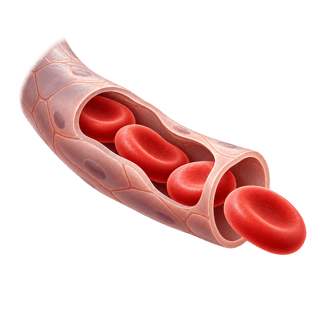
Healthy blood sits on a flat stretch near the top. Breathe a little less or go a little higher and the number barely moves, because nearly every oxygen seat stays filled. Lower down, the curve turns steep, and small changes in the oxygen reaching your lungs move the number a lot. Luks and Swenson, two doctors who study oxygen at altitude, write that up high, saturation changes fast with small changes in oxygen.
The researchers behind the big Apple Watch study write the same lines as MedlinePlus. Under 92 while breathing ordinary air at sea level usually gets a closer look, and values that stay under 90 point to low oxygen in the blood.
There’s a second reason to act at 92 instead of waiting. Sensors tend to show too high when oxygen is low. Below a true 88, a medical finger oximeter was off by about 3.5 points and an Apple Watch Series 7 by about 6, in 9 young adults breathing controlled low oxygen, and both leaned high. In hospital patients whose oximeter showed 92 to 96, the blood test found true oxygen under 88 for 11.7% of Black patients’ measurements and 3.6% of White patients’. A 92 on the screen can be lower in your blood.
What can throw the number off?
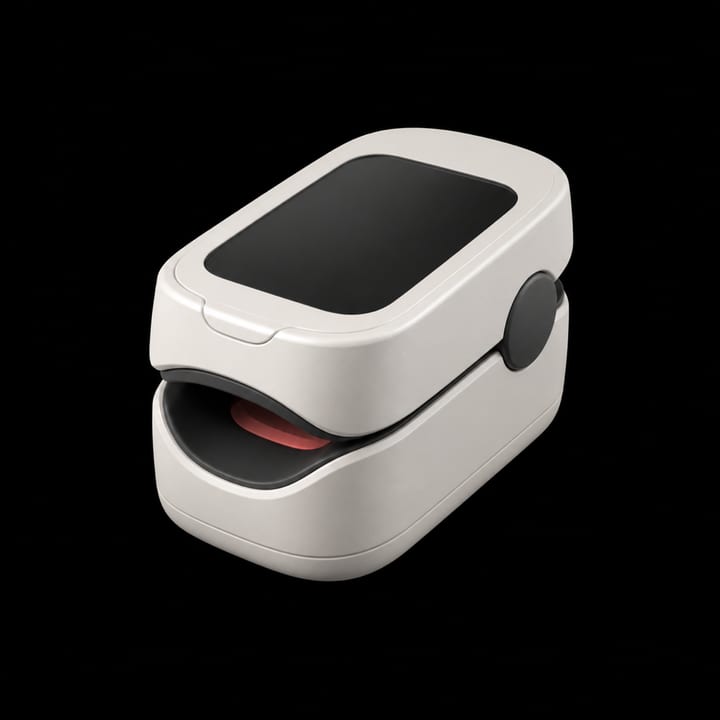
Cold hands, dark nail polish, fake nails, poor circulation and moving around all throw a finger oximeter off, MedlinePlus and the FDA say. A loose watch band, or some tattoos under the sensor, can do the same to an Apple Watch, Apple says. Darker skin and smoking are on the official lists too, and both tend to push the number up, so they can hide a low one. The fix for a surprising low number is a second try done right: sitting still, hand warm and below your heart, until the number stops changing (how to measure it).
Is low different if you live up high?
A little. MedlinePlus says levels can run lower if you live at a higher elevation, and in the watch study each kilometre (3,300 feet) of elevation took about 1.2 points off a typical night. Above about 8,200 feet the study’s straight line stops working, and the CDC says people with altitude sickness usually show a number that’s normal for the altitude. Up there, how you feel decides (what’s normal at altitude).
Children’s numbers differ, so ask your child’s doctor.
11 sources
- MedlinePlus, Pulse Oximetry, US National Library of Medicine, updated September 12, 2024medlineplus.gov
- CDC, Symptoms of COVID-19, emergency warning signs, checked 2026-11-14cdc.gov
- Shapiro I and others, Pulse oximetry values from 33,080 participants in the Apple Heart and Movement Study, npj Digital Medicine, 2023pmc.ncbi.nlm.nih.gov
- Gries RE and Brooks LJ, Normal oxyhemoglobin saturation during sleep: how low does it go?, Chest, 1996europepmc.org
- Luks AM and Swenson ER, Pulse oximetry at high altitude, High Altitude Medicine and Biology, 2011europepmc.org
- Jiang and others, an Apple Watch Series 7 and a medical-grade finger oximeter against arterial blood tests in 9 healthy adults under controlled low oxygen, 2026pmc.ncbi.nlm.nih.gov
- Sjoding MW and others, Racial bias in pulse oximetry measurement, New England Journal of Medicine, 2020pmc.ncbi.nlm.nih.gov
- US Food and Drug Administration, Pulse oximeter basics, content current as of March 26, 2025fda.gov
- Apple Support, About Blood Oxygen on Apple Watch, checked 2026-11-14support.apple.com
- Hampson NB, Pulse oximetry in severe carbon monoxide poisoning, Chest, 1998europepmc.org
- CDC Yellow Book, High-Altitude Travel and Altitude Illness, updated April 23, 2025cdc.gov