How do I measure my blood oxygen correctly?
On this page
Sit still, warm your hands, take off dark polish or fake nails, keep your hand relaxed below the level of your heart, and wait until the number stops changing. Then judge it with how you feel, because how you feel outranks the number.
What we’d do
Do it the same way every time, and write each number down with the date and time. Judge a surprising low one only after a calm second try. And if you have trouble breathing, chest pain, new confusion, or gray or blue lips, skip all of this and call 911.
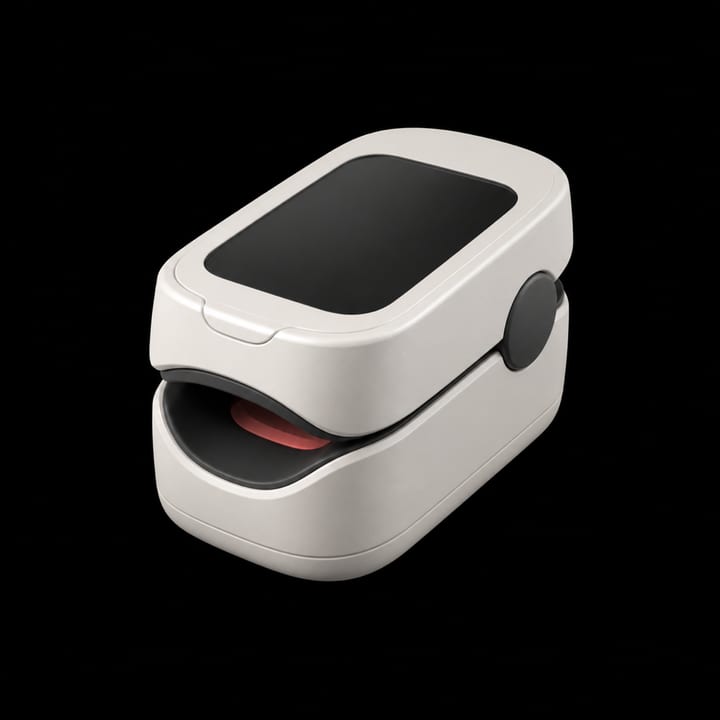
With a finger oximeter
- Sit down and rest a few minutes first. A number taken right after the stairs isn’t a resting number.
- Warm your hands. Cold skin and poor circulation are on MedlinePlus’s list of things that throw it off.
- Clear the finger. Dark nail polish blocks the light, and artificial nails get in the way too. Use a clean finger.
- Keep your hand relaxed and below your heart, the FDA says.
- Stay still, with the clip fitting snugly and out of bright light. Movement, room light and a loose fit all cause errors.
- Wait for one steady number. The FDA says to wait until it stops changing.
- Write it down, with the date and time, so you and your doctor can see the trend.
It’s like weighing yourself. Same scale, same time of day, same clothes, or the changes you see are just the conditions changing.
With an Apple Watch
Wear it snug but comfortable, with the back of the watch touching your wrist. Rest your arm on a table or in your lap, wrist flat and the watch face up. Open the Blood Oxygen app, tap Start, and hold still for the full 15 seconds. Apple also says some tattoos, and how much blood is flowing through your skin, can change the result.
Overnight, on a watch or ring
- On an Apple Watch, turn on Track Sleep, or it won’t measure in your sleep at all.
- Oura measures on nights longer than three hours, and you can switch it on or off under Blood Oxygen Sensing.
- Wear the device the same way every night, on the same wrist or finger, snug.
- Compare each night with your own usual nights on that device, never with someone else’s.
What do you do with the number?
| Awake and resting | What to do |
|---|---|
| 95 to 100 | Nothing. That’s the normal range |
| 93 or 94 | Recheck the same way. If it settles at 95 or more, you’re done |
| 89 to 92 | Call your doctor that day |
| 88 or lower | Get medical care now |
Those lines come from MedlinePlus, the US National Library of Medicine’s health site, for awake, resting numbers at your usual elevation. Night numbers run lower and need their own yardstick, and the tool below handles both. If your doctor has given you your own target, use theirs.
6 sources
- US Food and Drug Administration, Pulse oximeter basics, content current as of March 26, 2025fda.gov
- MedlinePlus, Pulse Oximetry, US National Library of Medicine, updated September 12, 2024medlineplus.gov
- Luks AM and Swenson ER, Pulse oximetry at high altitude, High Altitude Medicine and Biology, 2011europepmc.org
- Apple Support, About Blood Oxygen on Apple Watch, checked 2026-11-14support.apple.com
- Oura, Blood oxygen sensing (SpO2), August 27, 2024, checked 2026-11-14ouraring.com
- American Lung Association, Pulse Oximetry, checked 2026-11-14lung.org