Are pulse oximeters less accurate on darker skin?
On this page
Yes, they can show too high. In hospital patients whose oximeter showed 92 to 96, a blood test found true oxygen under 88 for 11.7% of Black patients’ measurements and 3.6% of White patients’. That’s about three times as often.
What we’d do
If you have darker skin, treat a 92 to 95 on an oximeter as possibly lower than it looks. Recheck it, call your doctor sooner, and let how you feel decide over the number. The 911 signs (trouble breathing, chest pain, new confusion, gray or blue lips) count the same for everyone, whatever the screen says.
What did the study find?
In 2020, doctors at the University of Michigan went through their hospital’s records from January to July of that year. They paired each pulse oximeter value with an arterial blood test taken within 10 minutes of it, for adults getting oxygen in the hospital. That gave 10,789 pairs from 1,333 White and 276 Black patients.
They looked at the moments when the oximeter showed a reassuring 92 to 96, and asked how often the blood said something else. For White patients, the blood showed oxygen under 88 in 3.6% of those moments. For Black patients, 11.7%.
They checked a second, much bigger group: intensive care patients at 178 hospitals in 2014 and 2015, with 37,308 pairs. The gap held, at 17.0% against 6.2%.
| Group | Oximeter showed 92 to 96, true oxygen under 88 |
|---|---|
| Michigan inpatients on oxygen, 2020, Black patients | 11.7% |
| Michigan inpatients on oxygen, 2020, White patients | 3.6% |
| ICU patients, 178 hospitals, Black patients | 17.0% |
| ICU patients, 178 hospitals, White patients | 6.2% |
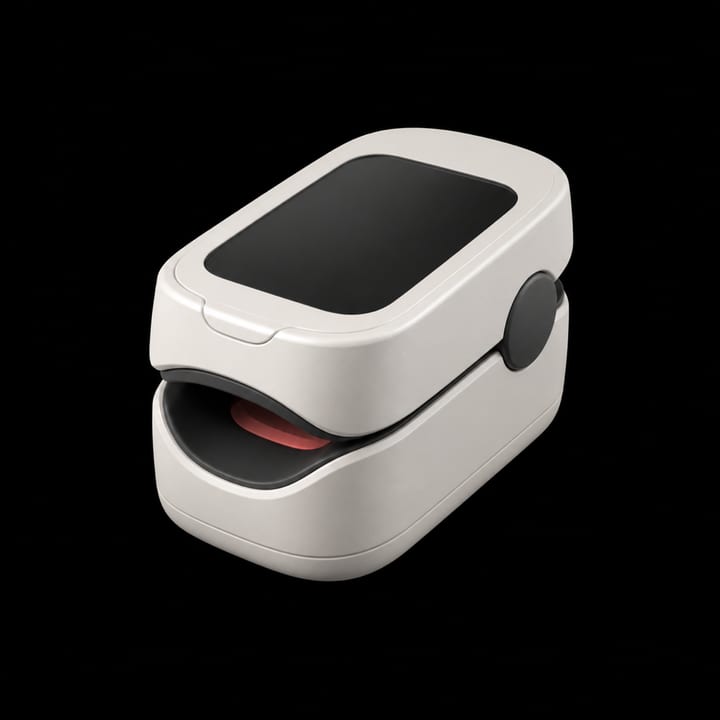
These were sick patients and hospital oximeters. The finger oximeter you buy for home works with the same two colors of light.
Why would skin color change the number?
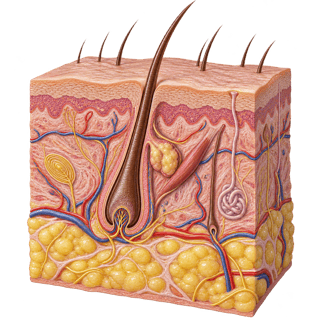
A pulse oximeter works with light, and MedlinePlus, the FDA and the American Lung Association all list skin pigment among the things that change the result, alongside cold skin, nail polish and smoking.
Picture a bathroom scale that shows a few pounds light for some people and is right for others. It’s still useful, as long as you know which group you might be in and leave room for it.
Do watches have the same problem?
We haven’t seen a good test of that yet. In the big Apple Watch study of 33,080 people, night values didn’t differ by race or ethnicity, but that study had no blood tests, so it can’t say whether the watch was right for anyone. The 2026 lab test that did use blood tests had only 9 people, most of them with brown or tan skin by the study’s measure, which is too few to compare skin tones. The Apple Watch in that test missed by about 6 points below a true 88, leaning high.
What’s being done about it?
The FDA’s 2025 draft guidance would hold finger oximeters and watch-type sensors to the same tighter accuracy limit, an average miss under 3 points, as the 2026 study’s authors describe it.
Every tool on this site shows the same darker-skin note on any number from 88 to 95, for everyone, so nobody has to tell us their skin color to see it.
8 sources
- Sjoding MW and others, Racial bias in pulse oximetry measurement, New England Journal of Medicine, 2020pmc.ncbi.nlm.nih.gov
- MedlinePlus, Pulse Oximetry, US National Library of Medicine, updated September 12, 2024medlineplus.gov
- US Food and Drug Administration, Pulse oximeter basics, content current as of March 26, 2025fda.gov
- American Lung Association, Pulse Oximetry, checked 2026-11-14lung.org
- Jiang and others, an Apple Watch Series 7 and a medical-grade finger oximeter against arterial blood tests in 9 healthy adults under controlled low oxygen, 2026pmc.ncbi.nlm.nih.gov
- Shapiro I and others, Pulse oximetry values from 33,080 participants in the Apple Heart and Movement Study, npj Digital Medicine, 2023pmc.ncbi.nlm.nih.gov
- CDC, Symptoms of COVID-19, emergency warning signs, checked 2026-11-14cdc.gov
- Severinghaus JW, Takuo Aoyagi: discovery of pulse oximetry, Anesthesia and Analgesia, 2007europepmc.org