
Does Oura measure blood oxygen?
On this page
Yes, while you sleep. Oura Ring Gen3 and Oura Ring 4 show an average blood oxygen for each sleep longer than three hours, plus breathing regularity, a count of suspected drops in the night. Treat it as a trend, and compare each night with your own usual ones.
What we’d do
Follow Oura’s nightly average over weeks, and treat a run of suspected drops as a reason to look closer. If the average keeps landing under 90, or the drops keep coming with loud snoring or pauses someone has seen, take a few weeks of screenshots to your doctor and ask about a sleep study.
What does Oura measure?
Here’s how Oura’s own page describes it (dated August 27, 2024, and checked on November 14, 2026).
| What | How Oura describes it |
|---|---|
| Average blood oxygen | The share of oxygen in your blood, averaged across the night, in the Sleep tab |
| Breathing regularity | How many suspected drops in blood oxygen it saw while you slept |
| When | During sleep periods longer than three hours |
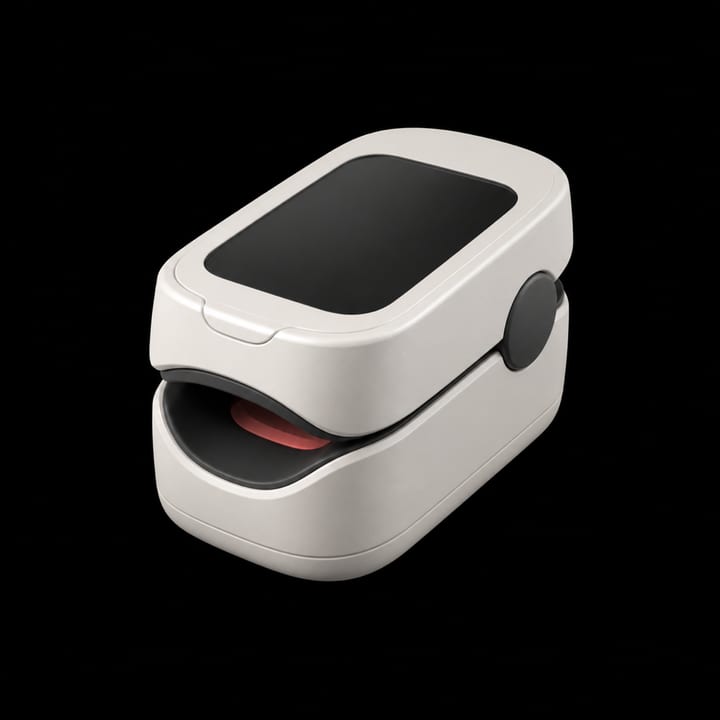
| How | Red and infrared lights in the ring shine into your finger, and it estimates oxygen from the light that comes back |
| Which rings | Oura Ring Gen3 and Oura Ring 4 |
| Turning it off | Under Blood Oxygen Sensing in the app’s main menu |
| Medical use | Oura says these numbers aren’t meant to diagnose any condition, and that healthy blood oxygen is 95 to 100 |
A nightly average is like your average speed on a road trip. It tells you how the drive went overall, and nothing about the one time you braked hard. Breathing regularity is Oura’s attempt to count the hard brakes.
How accurate is it?
We haven’t seen a published test of Oura’s blood oxygen against a blood sample. The ring sits on your finger, but it catches reflected light the way a watch does, not light shone all the way through like a finger clip. In a 2026 lab test of another reflected-light device against blood, an Apple Watch Series 7 missed by about 4.6 points on average and leaned high, in 9 young adults breathing controlled low oxygen. Oura may do better or worse, and we haven’t seen a test that shows which. Devices sold for general wellness don’t go through FDA review before they’re sold.
What’s a normal Oura night?
Oura’s night average is the same kind of number as a watch’s night average, and in 33,080 Apple Watch wearers the average night was 95.4. At sea level, a typical night for a 40-year-old runs from about 93.5 to 98.4 on that watch. A different device can sit a point or two away from that, so your own past nights on your own ring are the better yardstick. If you see a lowest value somewhere, remember that a healthy night’s lowest point averaged about 90 in a sleep lab.
Does it reach Gyroscope?
Yes. Gyroscope takes blood oxygen from an Apple Watch (Series 6 or later), Oura, WHOOP 4.0 or Garmin with Pulse Ox on, worn to bed. Wear your watch or ring to bed, and Gyroscope shows last night’s blood oxygen beside your sleep every morning. Oura’s heart rate variability is covered on hrv.guide’s Oura page.
5 sources
- Oura, Blood oxygen sensing (SpO2), August 27, 2024, checked 2026-11-14ouraring.com
- Shapiro I and others, Pulse oximetry values from 33,080 participants in the Apple Heart and Movement Study, npj Digital Medicine, 2023pmc.ncbi.nlm.nih.gov
- Gries RE and Brooks LJ, Normal oxyhemoglobin saturation during sleep: how low does it go?, Chest, 1996europepmc.org
- US Food and Drug Administration, Pulse oximeter basics, content current as of March 26, 2025fda.gov
- Jiang and others, an Apple Watch Series 7 and a medical-grade finger oximeter against arterial blood tests in 9 healthy adults under controlled low oxygen, 2026pmc.ncbi.nlm.nih.gov