What are the symptoms of low blood oxygen?
On this page
The symptoms that count are the emergency ones. Call 911 if you have trouble breathing, chest pain or pressure that doesn’t go away, new confusion, can’t stay awake, or your lips, nail beds or skin look pale, gray or blue, whatever the number says.
What we’d do
Go by how you feel first and the number second. Any of those signs with a normal number on your oximeter is still a 911 call. A number of 92 or lower at rest with none of them is a call to your doctor that day, with a careful recheck while you wait.
What do the signs look like?
The CDC lists these as emergency warning signs:
- Trouble breathing
- Pain or pressure in the chest that doesn’t go away
- New confusion
- Being unable to wake up or stay awake
- Lips, nail beds and skin that look pale, gray or blue, depending on skin tone
MedlinePlus, the US National Library of Medicine’s health site, gives people who check their oxygen at home a similar list: lips, nails or face that look bluish, trouble breathing or shortness of breath, chest pain or tightness, and a fast heart rate.
The CDC words the color sign by skin tone. Depending on your skin, the lips, nail beds and skin may look pale or gray as well as blue, so check all three.
Why can’t the number be the judge?
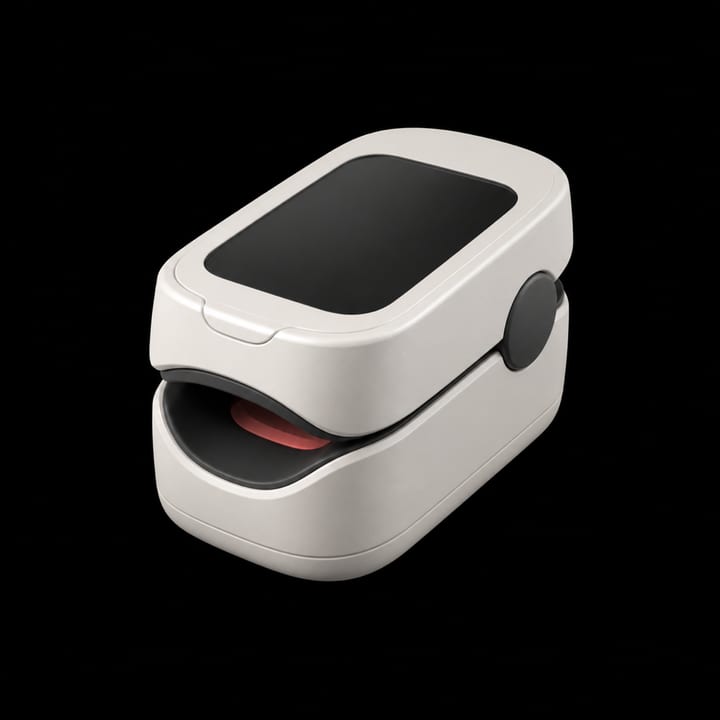
A pulse oximeter is like a smoke alarm. Most of the time it’s right, and it’s handy to have. But if you smell smoke, you don’t stand in the kitchen waiting for it to beep. Three things can keep the number looking fine while your blood isn’t:
- Sensors show too high when oxygen is low. Below a true 88, a medical finger oximeter was off by about 3.5 points and an Apple Watch Series 7 by about 6, in 9 young adults breathing controlled low oxygen, and both leaned high. In hospital patients whose oximeter showed 92 to 96, true oxygen was under 88 for 11.7% of Black patients’ measurements and 3.6% of White patients’.
- Carbon monoxide fools it. In 30 people with severe carbon monoxide poisoning, pulse oximeters showed oxygen consistently higher than the blood test found.
- Altitude sickness hides from it. The CDC says people with altitude sickness usually show a number that’s normal for the altitude, or only a little lower.
What if you feel short of breath but the number is normal?
Get checked anyway. Trouble breathing is on both lists, whatever the oximeter shows, and the CDC says its list isn’t complete, so call a doctor for any other symptom that’s severe or worrying. A normal number is good news, and it still doesn’t rule anything out on its own (why a normal number can still be wrong).
What about a low number with no symptoms?
Start with a recheck. Sit still, warm your hands, take off dark polish, and wait until the number stops changing. Awake and resting, 92 or lower means call your doctor that day, and 88 or lower means get medical care now (what counts as low). A dip on your watch while you slept is a different thing, and healthy sleepers dip to about 90 (why it drops at night).
Children’s numbers differ, so ask your child’s doctor.
6 sources
- CDC, Symptoms of COVID-19, emergency warning signs, checked 2026-11-14cdc.gov
- MedlinePlus, Pulse Oximetry, US National Library of Medicine, updated September 12, 2024medlineplus.gov
- Jiang and others, an Apple Watch Series 7 and a medical-grade finger oximeter against arterial blood tests in 9 healthy adults under controlled low oxygen, 2026pmc.ncbi.nlm.nih.gov
- Sjoding MW and others, Racial bias in pulse oximetry measurement, New England Journal of Medicine, 2020pmc.ncbi.nlm.nih.gov
- Hampson NB, Pulse oximetry in severe carbon monoxide poisoning, Chest, 1998europepmc.org
- CDC Yellow Book, High-Altitude Travel and Altitude Illness, updated April 23, 2025cdc.gov