A normal reading means your oxygen is fine
Short answerSort of
On this page
Sort of. Most of the time a normal number means normal oxygen. But oximeters tend to show too high when oxygen is low, and more so on darker skin. In hospital patients whose finger oximeter showed 92 to 96, true oxygen was under 88 for 11.7% of Black patients’ measurements.
Call 911 if you have trouble breathing, chest pain or pressure that doesn't go away, new confusion, can't stay awake, or your lips, nail beds or skin look pale, gray or blue, whatever the number says.
What we’d do
Let a normal number reassure you only when you also feel normal. If you have any of the 911 signs, call whatever the screen says. If you feel unwell and the number is in the low to mid 90s, call your doctor, and don’t wait for it to drop to 92. If your skin is darker, give your symptoms even more weight than the number.
If you remember three things
- The errors lean high when oxygen is low. In a lab test, an Apple Watch showed too high 85% of the time once true oxygen was under 88.
- Skin tone changes the number. Melanin shifts the light the sensor sees toward a higher result.
- Some problems never show up on it. Carbon monoxide and anemia can both come with a normal-looking number.
Why it sounds right
Hospitals clip an oximeter to almost every patient, and the number on the screen looks precise. When you buy one for home, it feels like you’ve bought a piece of the hospital. If it says 96, it’s natural to stop worrying.
Most of the time that’s fine. The trouble is the times it isn’t, and those cluster at the worst moment, when oxygen is low.
Can a silent smoke alarm mean there’s no fire?
A smoke alarm with a weak battery stays quiet while the kitchen fills with smoke. You’d never stand in a smoky room trusting the silence. You’d go by what you can see and smell.
An oximeter is the alarm. Trouble breathing, chest pain, confusion and gray or blue lips are the smoke.
The study that changed how doctors see the number
In 2020, Michael Sjoding and colleagues at the University of Michigan paired finger oximeter numbers with arterial blood tests taken from the same patients. They had 10,789 pairs from 1,333 White and 276 Black patients on oxygen in the first seven months of 2020. When the oximeter showed 92 to 96, a number most people would call fine, true oxygen was under 88 in 11.7% of Black patients’ measurements and 3.6% of White patients’.
They checked it in a second, much bigger group, 37,308 pairs from intensive care units at 178 hospitals. The gap held, at 17.0% against 6.2%. The researchers called it occult hypoxemia, meaning low oxygen hidden behind a normal-looking number.
Why does skin tone change the number?
Melanin soaks up more of the shorter, redder light than the longer, infrared light. When an oximeter’s light passes through darker skin, what reaches the detector is shifted toward the infrared end. The sensor’s ratio comes out smaller, and a smaller ratio turns into a higher number.
Calibration makes it worse. The researchers who modeled it in 2026 say standard calibration testing usually uses volunteers who are about 85% light-skinned, so the formula fits lighter skin best. They also point out that recalibrating on darker skin would only move the error onto lighter skin.
What else can hide behind a normal number?
- Low oxygen in anyone. In 9 young adults breathing low-oxygen air in a lab, a medical finger oximeter showed too high in about half its measurements once true oxygen was under 88, and an Apple Watch Series 7 in 85%.
- Carbon monoxide. A standard two-light oximeter counts carbon monoxide on hemoglobin as oxygen, so it can show a normal number in carbon monoxide poisoning.
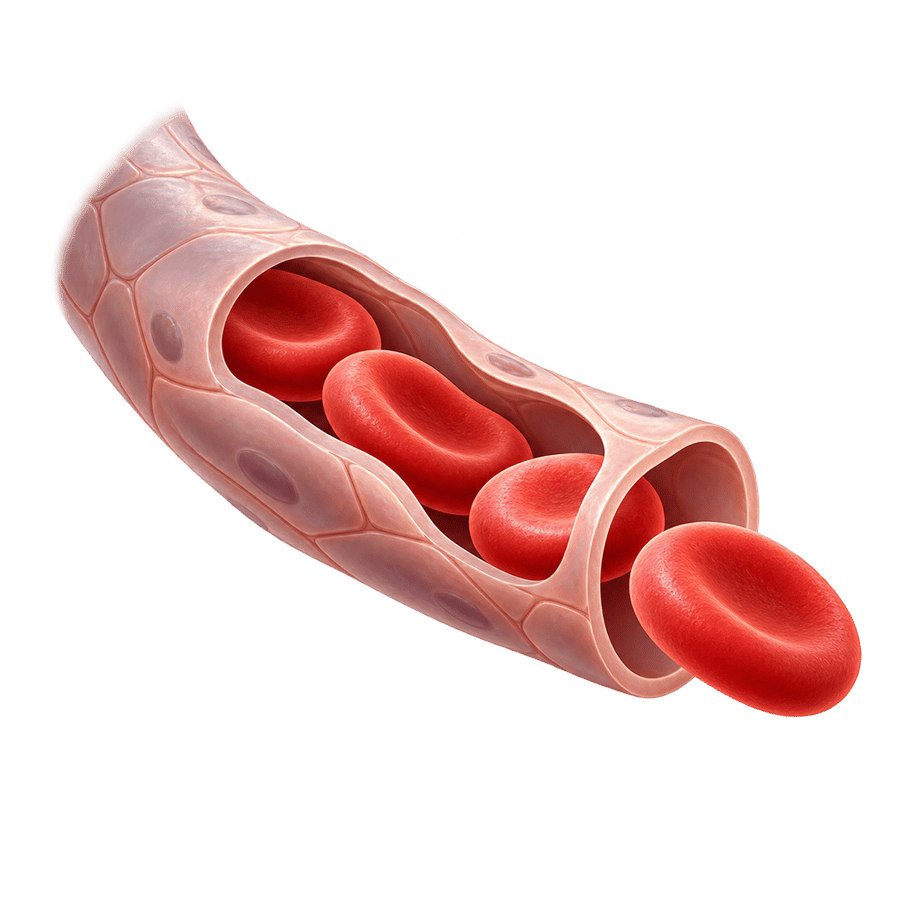
- Anemia. With too little hemoglobin, the seats can all be filled and the blood still carries less oxygen. The share stays about the same while the amount falls.
- Altitude sickness. The CDC says people with altitude sickness usually show a normal number for the altitude.
The best case for the myth
“If oximeters were this unreliable, hospitals wouldn’t use them.” They use them because they’re good at what they do in most patients most of the time. In critically ill patients with true oxygen of 90 or more, finger oximeters were off by under 2 points on average. Doctors can also test the blood directly, the way the Michigan team did. At home, you’re the one doing the looking. MedlinePlus lists darker skin, cold skin, poor circulation and dark nail polish as things that throw it off, and the American Lung Association says the numbers shouldn’t be used on their own to judge your health.
Is my blood oxygen normal? Take the quiz All the myths
9 sources
- Sjoding MW and others, Racial bias in pulse oximetry measurement, New England Journal of Medicine, 2020pmc.ncbi.nlm.nih.gov
- Jiang Y and others, Performance of wearable pulse oximetry during controlled hypoxia induction: instrument validation study, JMIR Formative Research, 2026pmc.ncbi.nlm.nih.gov
- Benner KJ, Goel NN and Rea MS, Cause, effect, and remediation of melanin-associated bias in pulse oximetry, Journal of Biomedical Optics, 2026pmc.ncbi.nlm.nih.gov
- Collins JA and others, Relating oxygen partial pressure, saturation and content: the haemoglobin-oxygen dissociation curve, Breathe, 2015pmc.ncbi.nlm.nih.gov
- CDC Yellow Book, High-Altitude Travel and Altitude Illnesscdc.gov
- CDC, Symptoms of COVID-19, emergency warning signscdc.gov
- MedlinePlus, Pulse Oximetry, US National Library of Medicine, updated September 12, 2024medlineplus.gov
- American Lung Association, Pulse Oximetrylung.org
- Jubran A, Pulse oximetry, Critical Care, 2015pmc.ncbi.nlm.nih.gov