How far can you trust the number?
On this page
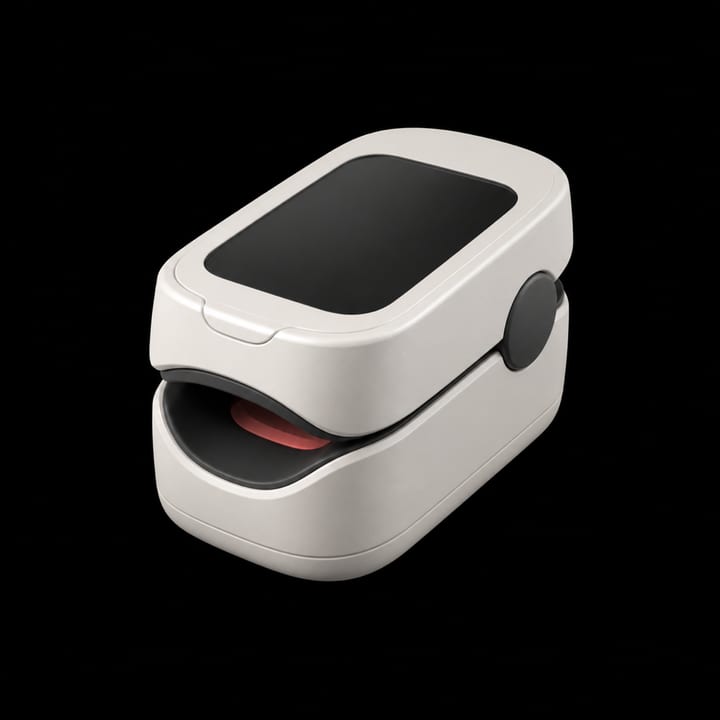
Close enough to follow your own nights on one device, and least trustworthy exactly when you’d need it most. When oxygen falls, finger oximeters and watches tend to show too high, and more so on darker skin, cold hands and a loose band.
Call 911 if you have trouble breathing, chest pain or pressure that doesn't go away, new confusion, can't stay awake, or your lips, nail beds or skin look pale, gray or blue, whatever the number says.
What we’d do
Use one device and compare it only with itself. Take awake spot checks on a finger oximeter, sitting still with warm hands. Never let a normal number talk you out of how you feel. If your skin is darker, treat a 92 to 95 with more care than the chart suggests, and call your doctor sooner when you feel unwell.
If you remember three things
- The errors lean high. In a lab test, an Apple Watch showed too high 85% of the time once true oxygen fell under 88.
- The lower the oxygen, the bigger the error. Oximeters are calibrated on healthy volunteers and never tested below about 80%.
- Skin tone changes the number. In hospital patients showing 92 to 96, true oxygen was under 88 three times as often in Black patients as in White patients.
Why do people trust the number so much?
Because it looks exact. A clean 97 on a screen feels as solid as the time on a clock. Hospitals use oximeters all day, so it’s natural to assume the one on your finger or wrist is as good as the one clipped to a patient.
The number is an estimate made from light. It’s very good in healthy people sitting still with warm hands. It gets worse as oxygen falls, as hands get colder and as skin gets darker. When oxygen is low, the error mostly runs one way, toward a number that looks better than the truth.
A simple way to picture it
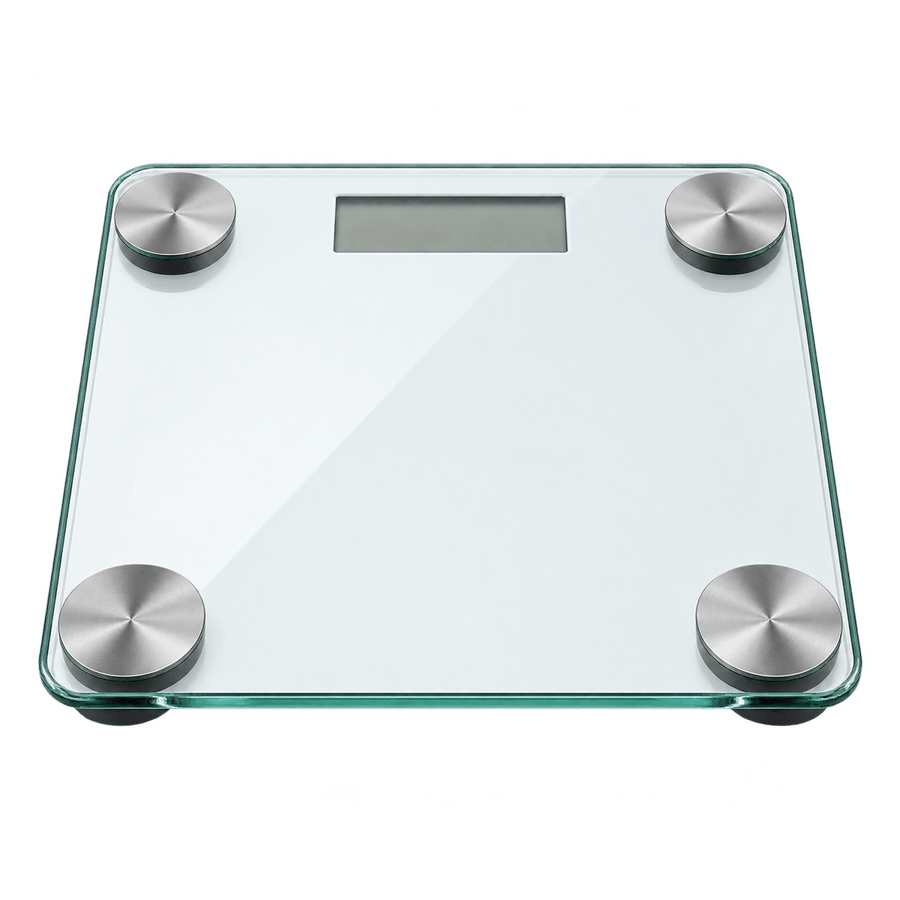
Imagine a bathroom scale that’s a couple of pounds off. You can still use it to see whether you lost weight this month, as long as you always step on the same one. Now imagine it gets more generous the heavier you are, knocking off more pounds the more you weigh.
An oximeter behaves like that second scale. It’s fine for following your own normal nights on one device. And the further your oxygen falls, the more it tends to flatter you.
What did the tests find?
Moderate We’re confident that sensors show too high when oxygen is low, and on darker skin. The studies on watches are small, and most rings and watches haven’t been tested at all.
A watch and a medical oximeter in the lab
9 healthy adults aged 19 to 28, breathing low-oxygen air with arterial blood drawn. Jiang, JMIR Formative Research, 2026
Once true oxygen fell under 88, a medical finger oximeter (Masimo MightySat Rx) was off by about 3.5 points and an Apple Watch Series 7 by about 6. Both mostly showed too high. Only 32% of the watch’s numbers and 49% of the finger oximeter’s were within 2 points of the blood test.
Nine young people, in a lab.
An older watch in a bigger test
50 healthy adults, an Apple Watch Series 6, as cited by Jiang, 2026
The watch was off by about 2 points on average, with a trend toward showing too high.
Reported secondhand, and in healthy volunteers.
Hospital finger probes and skin tone
1,609 University of Michigan inpatients on oxygen in 2020, and 8,392 intensive care patients at 178 hospitals. Sjoding, NEJM, 2020
When the finger probe showed 92 to 96, true oxygen was under 88 for 11.7% of Black patients’ measurements against 3.6% of White patients’ in Michigan, and 17.0% against 6.2% across the 178 hospitals.
Sick hospital patients, many of them on oxygen.
A Garmin on a mountain
13 healthy lowlanders after a fast climb to 14,957 feet (4,559 m). Schiefer, Sensors, 2021
Blood tests averaged 75%, a medical oximeter 81% and a Garmin Fenix 5X Plus 85%. The Garmin was 7 points high on average, and most of its errors fell between about 6 points too low and 20 too high.
One older Garmin model, very high up.
Why does accuracy fall apart at low numbers?
Three reasons stack up. Oximeters turn a light ratio into a percentage with a table built on healthy volunteers, and for ethical reasons nobody is taken below about 80% while it’s built. Doctors who study altitude say device accuracy declines once true saturation falls under 80%. And in hospital patients, finger oximeters were off by under 2 points on average while true oxygen was 90 or more, with the error growing once it fell under 90.
Watches and rings have a harder job than finger clips on top of that. They catch the small amount of light that scatters back out of the skin, and motion, room light and skin differences hit them harder.
Why does skin tone change the number?
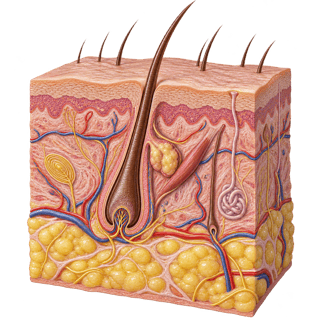
Melanin, the pigment in skin, soaks up more of the shorter, redder light than the longer light. When an oximeter’s light passes through darker skin, what reaches the detector is shifted toward the infrared end. The sensor’s red-to-infrared ratio comes out smaller, and a smaller ratio turns into a higher number.
Calibration makes it worse. The researchers who modeled the effect in 2026 say the standard calibration testing usually uses volunteers who are about 85% light-skinned, so the formula fits lighter skin best. Another modeling study, in 2025, found melanin cuts the red light that bounces back to a reflectance sensor, the kind in a watch, more than the infrared, with the error growing as skin gets darker.
What it means for you is practical. If your skin is darker and your finger oximeter shows 92 to 95, your true oxygen may be lower than that. Treat the 88 to 95 range with more care, and let symptoms carry more weight.
What else throws the number off?
| Cause | What happens |
|---|---|
| Cold hands or poor circulation | Less blood in the skin, a weaker pulse for the sensor to use |
| Dark nail polish or artificial nails | They block the light. Black, purple and dark blue polish caused the biggest errors in tests |
| Moving | The sensor can mistake motion for a pulse |
| A loose watch band | Apple says to make sure your watch isn’t loose on your wrist |
| Some tattoos | Apple says they can change how the sensor performs |
| Bright room light | One of the sources of error doctors list at altitude |
| Carbon monoxide | Counted as oxygen by a two-light sensor, so the number can look normal in carbon monoxide poisoning |
| Tobacco use, thick skin, dirty fingers | Listed by MedlinePlus and the American Lung Association as causes of wrong numbers |
What we don’t know yet
For Oura, WHOOP, Fitbit, Pixel Watch and Samsung, we haven’t seen a published test of blood oxygen under low oxygen. Nobody has measured how far any of them is off at 88. Which device? shows what each one records, and draws the error as a dashed ring where no test exists.
The American Lung Association says oximeter numbers shouldn’t be used on their own to judge your health, and that abnormal or inconsistent numbers are for your doctor.
The sceptic says
If oximeters are biased on darker skin, they’re useless. Why trust any number from one?
My watch said 99, so I’m fine. It’s measuring all night, which has to be better than a quick finger check.
The reply
It’s still close most of the time. In people sitting still with warm hands and normal oxygen, the average error is about 2 points. The problem is a number that looks fine when it isn’t, so the 911 signs come first for everyone, and darker-skinned people get more reason to act on symptoms. The 2026 modeling paper’s authors add that recalibrating on darker skin would only move the error onto lighter skin.
A watch has the same blind spots. A watch measures now and then when you’re still, by bouncing light off your wrist. In the lab test, its numbers were further off than the finger oximeter’s, and leaned high.
13 sources
- Jiang Y and others, Performance of wearable pulse oximetry during controlled hypoxia induction: instrument validation study, JMIR Formative Research, 2026pmc.ncbi.nlm.nih.gov
- Sjoding MW and others, Racial bias in pulse oximetry measurement, New England Journal of Medicine, 2020pmc.ncbi.nlm.nih.gov
- Schiefer LM and others, Validity of peripheral oxygen saturation measurements with the Garmin Fenix 5X Plus wearable device at 4559 m, Sensors, 2021europepmc.org
- Jubran A, Pulse oximetry, Critical Care, 2015pmc.ncbi.nlm.nih.gov
- Nitzan M, Romem A and Koppel R, Pulse oximetry: fundamentals and technology update, Medical Devices: Evidence and Research, 2014pmc.ncbi.nlm.nih.gov
- Benner KJ, Goel NN and Rea MS, Cause, effect, and remediation of melanin-associated bias in pulse oximetry, Journal of Biomedical Optics, 2026pmc.ncbi.nlm.nih.gov
- Al-Halawani R, Qassem M and Kyriacou PA, Monte Carlo simulation of the effect of melanin concentration on light-tissue interactions in reflectance pulse oximetry, Sensors, 2025pmc.ncbi.nlm.nih.gov
- Luks AM and Swenson ER, Pulse oximetry at high altitude, High Altitude Medicine and Biology, 2011europepmc.org
- Collins JA and others, Relating oxygen partial pressure, saturation and content: the haemoglobin-oxygen dissociation curve, Breathe, 2015pmc.ncbi.nlm.nih.gov
- MedlinePlus, Pulse Oximetry, US National Library of Medicine, updated September 12, 2024medlineplus.gov
- American Lung Association, Pulse Oximetrylung.org
- Apple Support, About Blood Oxygen on Apple Watch, checked 2026-11-14support.apple.com
- CDC, Symptoms of COVID-19, emergency warning signscdc.gov