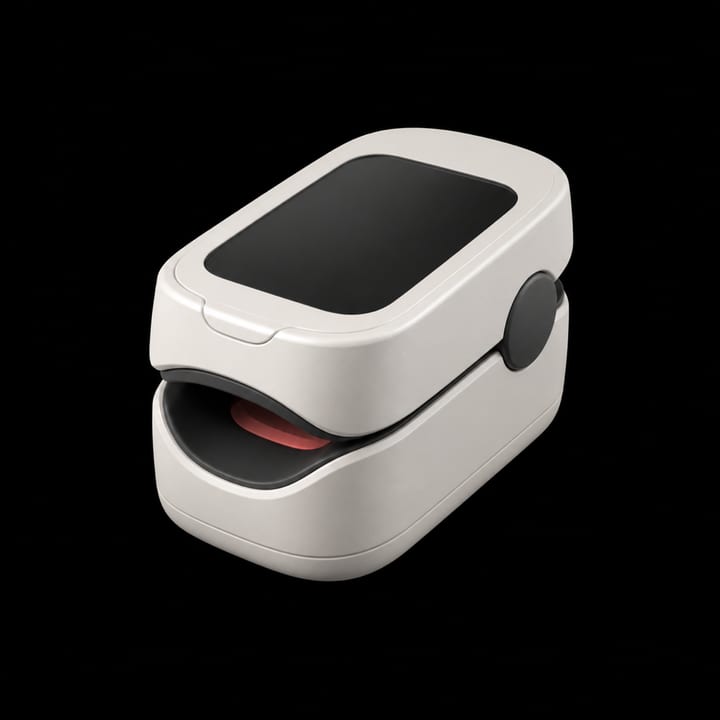
A healthy blood oxygen is 100%
Short answerNo
On this page
No. Healthy blood sits near full, and it doesn’t need to be at full. Awake and resting, 95 to 100 is the normal range, and in 33,080 Apple Watch wearers the average day was 96.2. A 96 and a 99 are the same healthy blood.
What we’d do
Stop chasing 100. Treat everything from 95 up as one zone, the normal one, and go by how you feel. Use the number to catch a drop against your own usual numbers on the same device, and spend no effort trying to push a 96 to a 99.
If you remember three things
- Healthy blood runs 96 to 98 in a blood test. That’s for people breathing room air at sea level.
- The gap between 96 and 99 is within the error. The FDA’s limit lets a finger oximeter be off by about 3 points on average.
- A 100 can still hide a problem. With too little hemoglobin, or carbon monoxide on board, the number can look perfect.
Why it sounds right
A percentage makes 100 look like the goal, the way it would on a test or a phone battery. A 96 looks like four points lost somewhere. If you once saw 99 on an oximeter, every 96 after it feels like a slide.
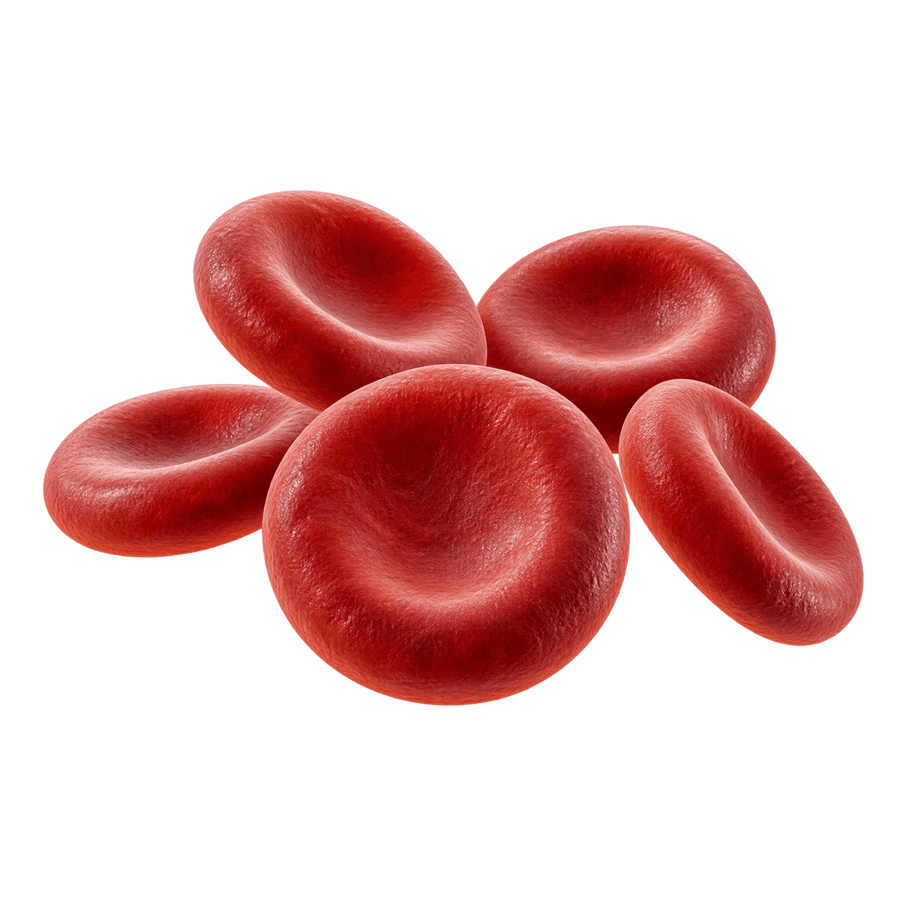
This number is a different kind of percentage. It’s the share of the oxygen seats on your hemoglobin that are filled, and healthy blood leaves a few of them empty.
Does a cup of coffee get better with the last drop?
Fill a coffee cup to just under the brim. Topping it up the last millimeter gives you almost no more coffee, and it all ends up on the saucer.
Your blood works like that near the top of the range. When the seats are already about 96% filled, filling the last few adds very little oxygen to what your blood carries.
What healthy numbers look like
- In a blood test. Healthy people breathing room air at sea level have arterial saturation between 96% and 98%.
- On a watch by day. In 33,080 Apple Watch wearers, the average day was 96.2 and the average night 95.4.
- Through a night in a sleep lab. In 350 people with normal sleep studies, the median through the night was 96.5.
The blood test numbers are for healthy people, and the watch wearers were ordinary adults going about their lives.
Why can’t you get to 100 by trying?
Hemoglobin’s curve is flat at the top. Each molecule holds up to four oxygen molecules, and once most seats are filled, adding more oxygen in your lungs barely changes the share. Once saturation is near 100%, raising the oxygen further can’t push it any higher, and only the tiny amount dissolved in the liquid part of your blood goes up.
That’s also why a 96 does the same job as a 99. The difference is about 3 seats in every 100, on blood that’s doing its job either way.
When can a perfect number mislead you?
- Anemia. With too little hemoglobin, every seat can be filled and the blood still carries less oxygen. Halving hemoglobin roughly halves the oxygen your blood carries, with little or no change in the share.
- Carbon monoxide. It takes the same seats as oxygen, and a standard two-light oximeter counts it as oxygen, so the number can look normal in carbon monoxide poisoning.
- A sensor that leans high. Oximeters tend to show too high when oxygen is low. In hospital patients whose finger oximeter showed 92 to 96, true oxygen was under 88 for 11.7% of Black patients’ measurements and 3.6% of White patients’.
That’s why trouble breathing, chest pain, new confusion or gray or blue lips means 911, whatever the number says.
The best case for the myth
“My old oximeter always showed 99, so a 96 is a real drop.” Maybe, but probably not. A different device, a different finger, cold hands or a few seconds less on the clip can each move the number by a point or two. In a lab test that lowered people’s oxygen, only 49% of a medical finger oximeter’s numbers landed within 2 points of the blood test. Compare a device with itself, on the same finger, warm and still. If it stays at 95 or more, you’re in the normal range.
Is my blood oxygen normal? Take the quiz All the myths
6 sources
- MedlinePlus, Pulse Oximetry, US National Library of Medicine, updated September 12, 2024medlineplus.gov
- Shapiro I and others, Pulse oximetry values from 33,080 participants in the Apple Heart and Movement Study, npj Digital Medicine, 2023pmc.ncbi.nlm.nih.gov
- Collins JA and others, Relating oxygen partial pressure, saturation and content: the haemoglobin-oxygen dissociation curve, Breathe, 2015pmc.ncbi.nlm.nih.gov
- Gries RE and Brooks LJ, Normal oxyhemoglobin saturation during sleep: how low does it go?, Chest, 1996europepmc.org
- Jiang Y and others, Performance of wearable pulse oximetry during controlled hypoxia induction: instrument validation study, JMIR Formative Research, 2026pmc.ncbi.nlm.nih.gov
- Sjoding MW and others, Racial bias in pulse oximetry measurement, New England Journal of Medicine, 2020pmc.ncbi.nlm.nih.gov