Deep breaths will raise your blood oxygen
Short answerNot the way you think
On this page
Not the way you think. If you’re at 97, your blood’s oxygen seats are already nearly all filled, so a deep breath has almost nothing to add. Breathing does move the number, which is why it dips in sleep and why your body breathes harder up a mountain. But a low number while you’re awake and resting has a cause, and that’s what needs finding.
What we’d do
If your number is normal, leave it alone. Breathing exercises won’t push a healthy 96 to a better place. If it’s low while you’re awake and resting, recheck with warm hands sitting still, and at 92 or lower call your doctor instead of trying to breathe it up. If you’re struggling to breathe, call 911.
If you remember three things
- Healthy blood is already 96 to 98% full. That’s in a blood test, breathing normal air at sea level.
- Extra breathing barely adds to full blood. Once the seats are nearly filled, only the tiny dissolved amount goes up.
- Breathing less lowers it. That’s one reason your number dips in sleep.
Why it sounds right
Oxygen comes in through your lungs, so more breathing should mean more oxygen. It’s the logic of filling a tank. And there’s a lot of advice online about breathing patterns that promise to oxygenate your body.
That logic works when the tank is low, and healthy blood almost never is.
Can you pump more air into a full tire?
Pump a bike tire that’s already at full pressure and nothing useful happens. The tire can’t hold more. Pump one that’s soft and the pressure comes right up.
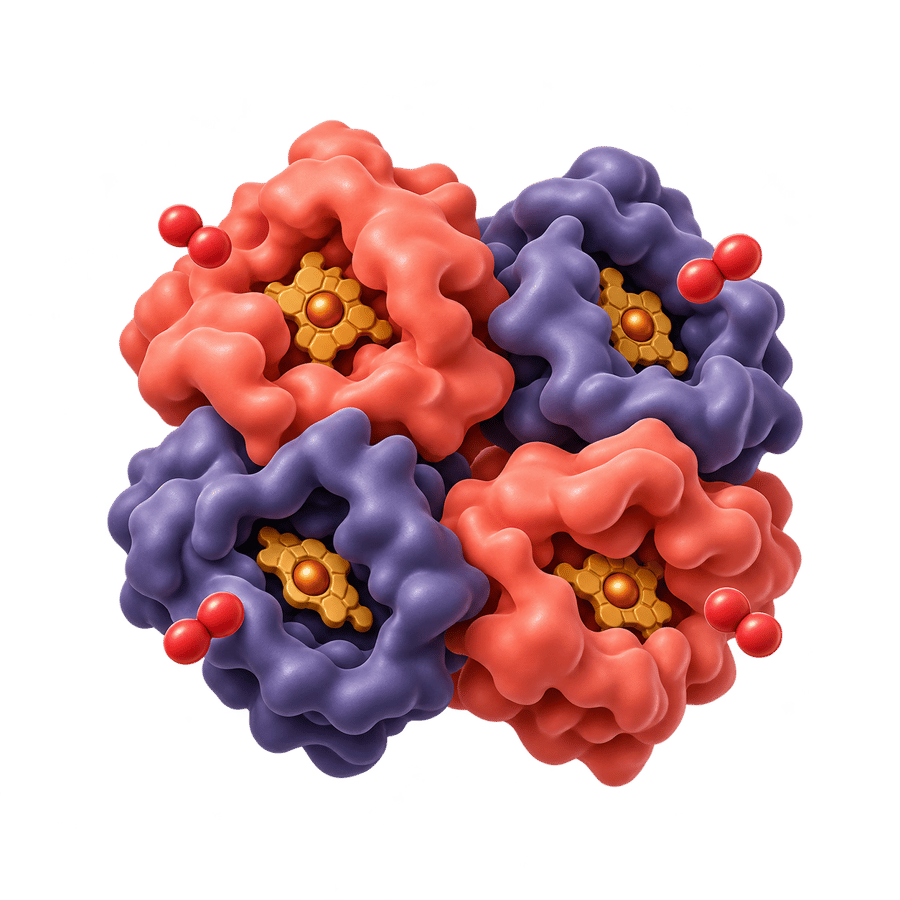
Healthy blood at sea level is the full tire. Your hemoglobin’s seats are about 96 to 98% filled, and breathing harder has very little left to fill.
Why doesn’t more breathing add more oxygen?
Almost all the oxygen in your blood rides on hemoglobin, and only a very small share dissolves in the liquid part. Hemoglobin’s curve is flat at the top. Once most of its seats are filled, raising the oxygen in your lungs can’t push the share much higher, and once it’s near 100% it can’t go any higher at all. Only the small dissolved amount keeps rising.
From 97 there are 3 seats in every 100 left. Even filling all of them would add very little oxygen to what your blood carries.
When does breathing change the number?
It changes when your breathing changes a lot, or when you’re on the steep part of the curve.
- In sleep. In a 1982 study of 19 healthy adults, the air they moved each minute fell about 6% in non-dreaming sleep and 16% in dreaming (REM) sleep. That’s part of why a watch shows lower numbers at night.
- Up high. At altitude, the seats start emptying because each breath carries less oxygen. The CDC says the first phase of getting used to altitude comes with a steady rise in breathing and better oxygen. Your body does this without being asked.
Breathing does move your number, mostly when it falls below normal or when the air itself is thin. On a normal day at sea level, there’s no headroom.
What should you do with a low number?
Find out why. A low awake number usually has a reason, and some of them are just the measurement. Cold fingers, dark nail polish and moving all throw it off, so recheck sitting still with warm hands. If it stays at 92 or lower, MedlinePlus says to call your doctor, and at 88 or lower to get medical care now. Breathing exercises don’t fix a lung infection or a heart problem, and a number nudged up by a few big breaths can make a real problem look smaller than it is.
If your skin is darker, a finger oximeter can show higher than your true oxygen. In hospital patients whose oximeter showed 92 to 96, true oxygen was under 88 for 11.7% of Black patients’ measurements and 3.6% of White patients’.
The best case for the myth
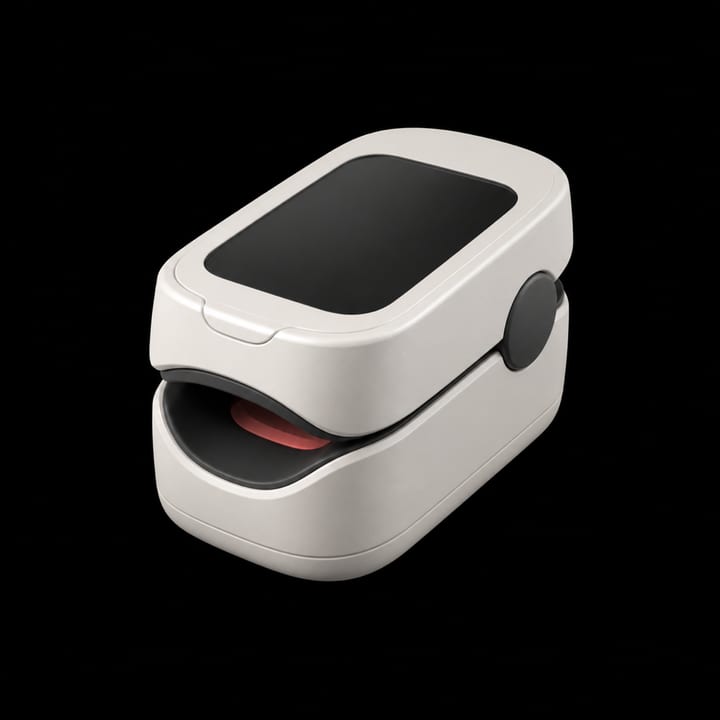
“I took ten slow deep breaths and my oximeter went from 94 to 97.” That can happen, and it doesn’t mean your blood got healthier. A finger oximeter that meets the FDA’s accuracy limit can be off by about 3 points on average, which covers that whole jump. Sitting still and letting your hand warm up while you breathe also gives the sensor a better pulse to work with, and motion is one of the biggest causes of wrong numbers. Recheck the same way a few minutes later, breathing normally. If you want to know what breathing exercises do and don’t do, breathwork.guide covers them.
Is my blood oxygen normal? Take the quiz All the myths
9 sources
- Collins JA and others, Relating oxygen partial pressure, saturation and content: the haemoglobin-oxygen dissociation curve, Breathe, 2015pmc.ncbi.nlm.nih.gov
- Douglas NJ and others, Respiration during sleep in normal man, Thorax, 1982europepmc.org
- CDC Yellow Book, High-Altitude Travel and Altitude Illnesscdc.gov
- Shapiro I and others, Pulse oximetry values from 33,080 participants in the Apple Heart and Movement Study, npj Digital Medicine, 2023pmc.ncbi.nlm.nih.gov
- Jiang Y and others, Performance of wearable pulse oximetry during controlled hypoxia induction: instrument validation study, JMIR Formative Research, 2026pmc.ncbi.nlm.nih.gov
- Jubran A, Pulse oximetry, Critical Care, 2015pmc.ncbi.nlm.nih.gov
- MedlinePlus, Pulse Oximetry, US National Library of Medicine, updated September 12, 2024medlineplus.gov
- Sjoding MW and others, Racial bias in pulse oximetry measurement, New England Journal of Medicine, 2020pmc.ncbi.nlm.nih.gov
- CDC, Symptoms of COVID-19, emergency warning signscdc.gov