Why does my watch show a different number than my oximeter?
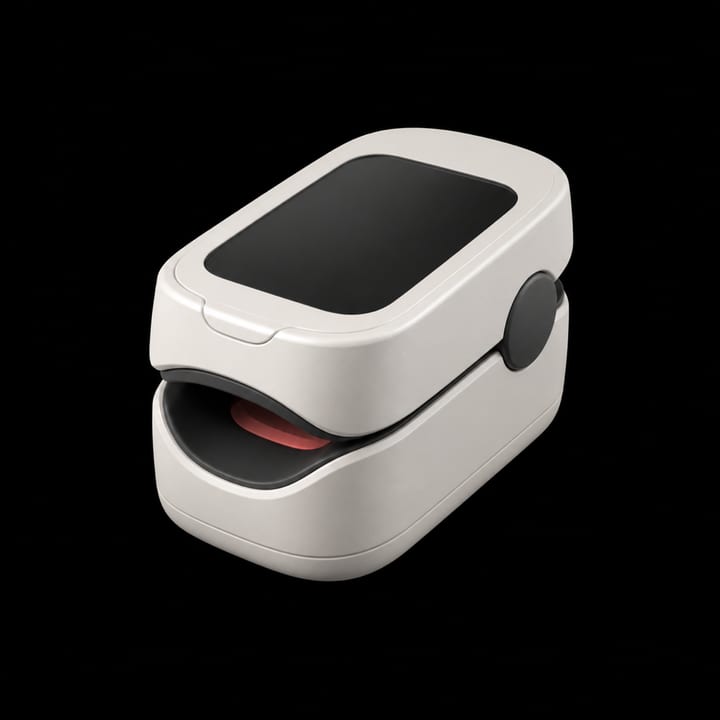
Because they measure differently. A finger clip shines light through your fingertip right now, while a watch bounces light off your wrist and samples now and then, often while you sleep. A gap of 2 or 3 points is inside what either one can be off by.
What we’d do
Don’t average them or pick the one you like. Use the finger clip for a check while you’re awake and still, use the watch for your nights, and compare each with its own history. If either shows 92 or lower while you’re awake and resting, recheck and call your doctor.
Why do they disagree?
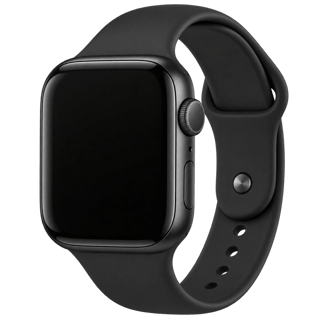
The light takes a different path. A finger clip shines red and infrared light through your fingertip to a detector on the other side. A watch, or a ring, shines it into your skin and catches what bounces back. In a 2026 lab test that ran both against blood at the same time, the finger clip came closer.
They measure at different moments. A finger clip shows you this minute, sitting at the table. An Apple Watch takes background measurements now and then when you’re still, about every 30 minutes in the big Apple Watch study, and only in sleep if Track Sleep is on. Oura shows an average across the whole night. Your blood oxygen really is lower asleep than awake, about 0.8 points on average, so a night number and a daytime clip shouldn’t match.
Each one has its own error. In 9 young adults breathing controlled low oxygen, a medical finger oximeter missed the blood test by about 3.0 points on average, and an Apple Watch Series 7 by about 4.6. Two devices that can each be a few points off can easily land 3 or 4 points apart while both are working.
Small things move each one. Cold hands, dark polish and moving around throw off a finger clip. A loose band, some tattoos and less blood flow in the skin throw off a watch.
Which one is closer?
Usually the finger clip, if it’s a decent one. In the 2026 lab test, the medical finger oximeter landed within 2 points of the blood test 49% of the time, and the Apple Watch 32%. Both leaned high.
The gap gets wider up a mountain. In 13 healthy lowlanders at 14,957 feet, the blood test averaged 75, a medical finger oximeter 81, and a Garmin watch 85. The two devices on the same people were 4 points apart, and the watch was 10 points off the blood.
It’s like two bathroom scales in two houses. Each one can track your weight fine over months. Comparing one with the other only tells you about the scales.
How do you compare them fairly?
- Sit down and rest for a few minutes, with warm hands.
- Wear the watch snug, wrist flat on a table, and start an on-demand measurement. Hold still for the full 15 seconds.
- Put the clip on a finger of the other hand, with no polish, and wait until it shows one steady number.
- Do it three times and write down both numbers each time.
If they’re always about the same distance apart, that’s just the two devices. If they jump around, one of them may not be sitting right. Either way, keep each device’s numbers in its own history.
6 sources
- Jiang and others, an Apple Watch Series 7 and a medical-grade finger oximeter against arterial blood tests in 9 healthy adults under controlled low oxygen, 2026pmc.ncbi.nlm.nih.gov
- Apple Support, About Blood Oxygen on Apple Watch, checked 2026-11-14support.apple.com
- Shapiro I and others, Pulse oximetry values from 33,080 participants in the Apple Heart and Movement Study, npj Digital Medicine, 2023pmc.ncbi.nlm.nih.gov
- Oura, Blood oxygen sensing (SpO2), August 27, 2024, checked 2026-11-14ouraring.com
- Schiefer LM and others, Validity of peripheral oxygen saturation measurements with the Garmin Fenix 5X Plus wearable device at 4559 m, Sensors, 2021europepmc.org
- MedlinePlus, Pulse Oximetry, US National Library of Medicine, updated September 12, 2024medlineplus.gov