Is 92 blood oxygen normal?
Awake and resting, 92 is a reason to call your doctor. As a watch night average at sea level it's unusual for people like you (under the 1st percentile), so run the three-night check.
Awake and resting, 92 or lower is a reason to call your doctor (MedlinePlus).
Under the 1st percentile at sea level for a 40-year-old, and about the 5th in Denver. One night means little, so run the three-night check.
In 350 people with normal sleep studies, the lowest point of the night averaged about 90, and most stayed between about 84 and 97.
Awake and resting, 92 is a reason to call your doctor today. Recheck once first, sitting still with warm hands, and if it stays at 92 or lower, make the call. Don’t talk yourself out of it: oximeters tend to show too high when oxygen is low, so a 92 on the screen can be lower in your blood. In hospital patients whose oximeter showed 92 to 96, true oxygen was under 88 for 11.7% of Black patients’ measurements and 3.6% of White patients’.
Asleep, 92 means different things depending on which number it is. As a watch’s night average at sea level, it’s unusual for a 40-year-old, under the 1st percentile, so run the three-night check with the same device and drinks kept the same. In Denver it’s about the 5th percentile, low but inside the typical range there. As the lowest point of a night, 92 is normal: in 350 people with normal sleep studies, the lowest point averaged about 90.
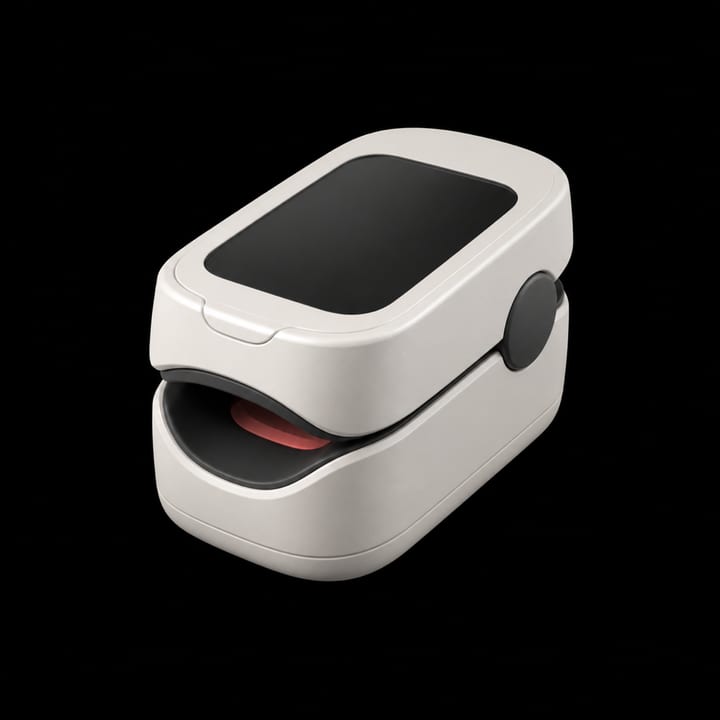
The device. A cleared finger oximeter can be off by about 3 points, a watch by about 2, and more when oxygen is low: below 88, an Apple Watch Series 7 was off by about 6 in 9 young adults.
Darker skin. Pulse oximeters can show too high on darker skin. In hospital patients whose oximeter showed 92 to 96, true oxygen was under 88 for 11.7% of Black patients' readings and 3.6% of White patients'.
Elevation. At Denver's 5,280 feet, a typical watch night sits about 1.9 points lower and a typical day about 1.4 lower. Above 8,200 feet the number can't tell you if you're getting sick, and symptoms decide.
When to get help
Call 911 if you have trouble breathing, chest pain or pressure that doesn't go away, new confusion, can't stay awake, or your lips, nail beds or skin look pale, gray or blue, whatever the number says.
Open this in Your number Is my blood oxygen normal? Take the quiz
8 sources
- MedlinePlus, Pulse Oximetry, US National Library of Medicine, updated September 12, 2024medlineplus.gov
- Shapiro I and others, Pulse oximetry values from 33,080 participants in the Apple Heart and Movement Study, npj Digital Medicine, 2023pmc.ncbi.nlm.nih.gov
- Gries RE and Brooks LJ, Normal oxyhemoglobin saturation during sleep, Chest, 1996europepmc.org
- Sjoding MW and others, Racial bias in pulse oximetry measurement, New England Journal of Medicine, 2020pmc.ncbi.nlm.nih.gov
- Jiang and others, an Apple Watch Series 7 and a medical-grade finger oximeter against blood tests in 9 healthy adults under controlled low oxygen, 2026pmc.ncbi.nlm.nih.gov
- Gries RE and Brooks LJ, Normal oxyhemoglobin saturation during sleep: how low does it go?, Chest, 1996europepmc.org
- Jiang and others, an Apple Watch Series 7 and a medical-grade finger oximeter against arterial blood tests in 9 healthy adults under controlled low oxygen, 2026pmc.ncbi.nlm.nih.gov
- Sjoding MW and others, Racial bias in pulse oximetry measurement, New England Journal of Medicine, 2020pmc.ncbi.nlm.nih.gov