Should I buy a pulse oximeter?
On this page
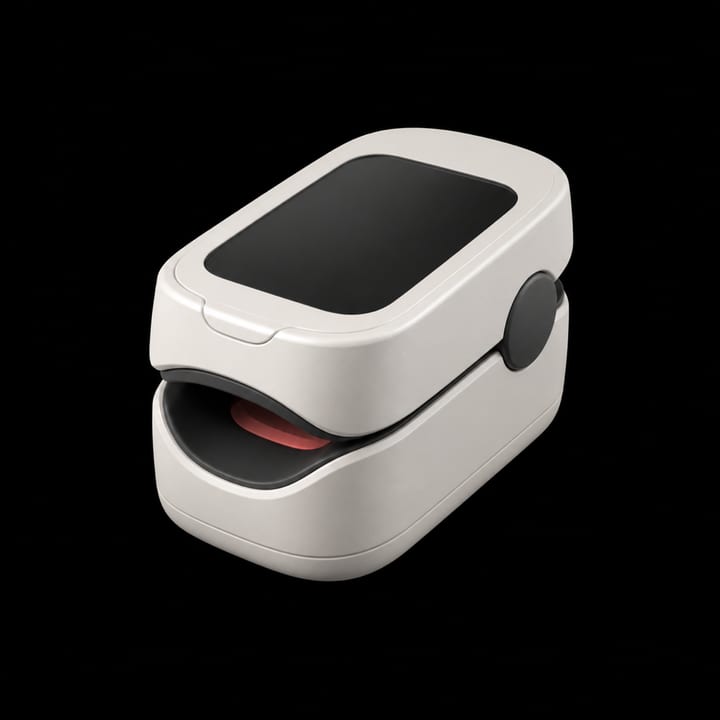
If you’ll use it well. A finger oximeter is fine for a spot check at rest if you know its limits: it can show too high on darker skin, cold hands and dark polish, and it never outranks how you feel. If your doctor has asked you to check at home, get one.
What we’d do
Buy one if your doctor wants you checking, or if you’d like an awake check to go with your watch’s nights. Where you can, pick one sold for medical use over a sports or wellness model. Learn your own usual number on a day you feel well, and write every check down.
Who gets the most out of one?
- People whose doctor asked them to check. The FDA’s first tip is to follow your doctor’s advice on when and how often.
- People with a lung or heart problem, which is when the American Lung Association says a doctor may suggest one.
- People who wear a watch to bed and want an awake check. A finger clip is the better tool for a daytime number, and a watch covers the nights.
For a healthy person who feels fine, it’s a nice-to-have. A healthy number sits at 95 to 100 almost all the time, so most checks will tell you what you already knew.
Medical or wellness?
The FDA says oximeters sold as general wellness products aren’t reviewed by the FDA before they’re sold, and only a small number of the ones meant for medical use are sold over the counter. We haven’t seen a test of the cheapest wellness clips against blood. In a 2026 lab test of 9 young adults breathing controlled low oxygen, a medical-grade finger oximeter was within 2 points of the blood test 49% of the time, against 32% for an Apple Watch Series 7.
What can’t it do?
| It can’t | Why |
|---|---|
| Rule out trouble when you feel unwell | Oximeters lean high when oxygen is low, and in hospital patients showing 92 to 96, true oxygen was under 88 for 11.7% of Black patients’ measurements and 3.6% of White patients’ |
| Tell you if you have altitude sickness | The CDC says people who have it usually show a number that’s normal for the altitude |
| Measure carbon monoxide | A regular pulse oximeter can’t, so a smoke or fume exposure can look fine on it |
| Tell you about your sleep | A spot check is one moment awake. Your nights need a watch, a ring, or a sleep study |
It’s like a thermometer in the medicine cabinet. Cheap and handy, most useful when you know what normal looks like for you, and never the reason to ignore feeling terrible.
How do you use it well?
Sit still, warm your hand and keep it relaxed below your heart, take polish off that finger, and wait until it shows one steady number, then write it down with the date and time. Those are the FDA’s steps (the full how-to). Awake and resting, 95 to 100 is normal, 92 or lower means call your doctor, and 88 or lower means get medical care now.
8 sources
- US Food and Drug Administration, Pulse oximeter basics, content current as of March 26, 2025fda.gov
- MedlinePlus, Pulse Oximetry, US National Library of Medicine, updated September 12, 2024medlineplus.gov
- Jiang and others, an Apple Watch Series 7 and a medical-grade finger oximeter against arterial blood tests in 9 healthy adults under controlled low oxygen, 2026pmc.ncbi.nlm.nih.gov
- Sjoding MW and others, Racial bias in pulse oximetry measurement, New England Journal of Medicine, 2020pmc.ncbi.nlm.nih.gov
- CDC Yellow Book, High-Altitude Travel and Altitude Illness, updated April 23, 2025cdc.gov
- Hampson NB, Carboxyhemoglobin: a primer for clinicians, Undersea and Hyperbaric Medicine, 2018europepmc.org
- Hampson NB, Pulse oximetry in severe carbon monoxide poisoning, Chest, 1998europepmc.org
- American Lung Association, Pulse Oximetry, checked 2026-11-14lung.org