Your number, explained
Put in the number, when it was, what measured it and where you were. The 911 signs come first, then where your number sits and what to do.
Height and weight
Left blank, the tool uses a BMI of 25.
Call 911 if you have trouble breathing, chest pain or pressure that doesn't go away, new confusion, can't stay awake, or your lips, nail beds or skin look pale, gray or blue, whatever the number says.
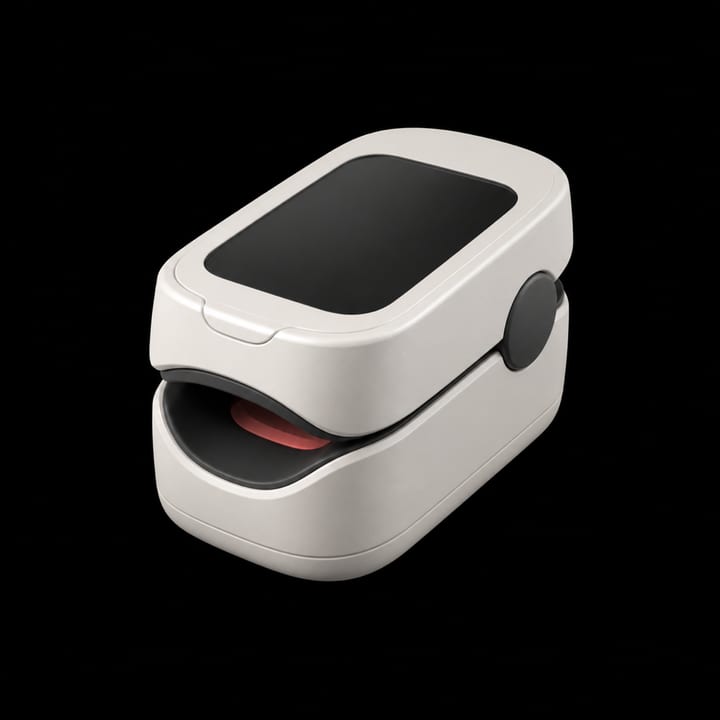
95 awake and resting on a finger oximeter, at sea level
Awake and resting, 95 to 100 is in the normal range.
- ElevationAt sea level, your elevation explains nothing here.
- AgeAt 40, your age is the reference, so it explains nothing.
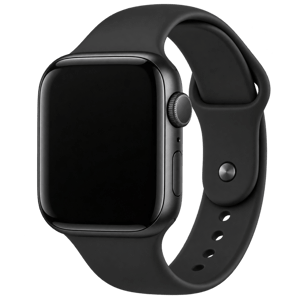
- DeviceYour oximeter can be off by about 3 points here.
Next step. Nothing to do for this number. Go by how you feel.
Pulse oximeters can show too high on darker skin. In hospital patients whose oximeter showed 92 to 96, true oxygen was under 88 for 11.7% of Black patients' readings and 3.6% of White patients'.
A cleared finger oximeter has to stay within about 3 points on average (the FDA's limit). Cold hands, dark polish and darker skin can push it off.
What your result means, and what to do next
- Green. Normal for that kind of number. There's nothing to do, and from here the useful comparison is your own usual nights on the same device.
- Amber. Awake, a 93 or 94 means sit still for a few minutes with warm hands and check again. Overnight, lower than most people like you means run the three-night check before you decide anything.
- Orange. Awake and resting at 92 or lower, call your doctor today and tell them the numbers. Overnight, a low point that keeps repeating is a reason to talk to your doctor.
- Red. Awake and resting at 88 or lower, get medical care now, and call 911 with any of the signs above.
- Symptoms decide. Above 8,200 feet the number can't tell you if you're getting sick, so use the morning check and don't go higher with symptoms.
If your skin is darker and the number sits between 88 and 95, the true number can be lower, so go by how you feel when the two disagree. Your blood oxygen is a smoke alarm explains how to think about every result.
How it works
Awake and resting, the lines are MedlinePlus's, from the US National Library of Medicine: 95 to 100 is in the normal range, 92 or lower means call your doctor, and 88 or lower means get medical care now. We call 93 or 94 a recheck. They apply as written up to 5,000 feet. From 5,000 to 8,200 feet the tool also shows the watch day band for your elevation.
For an overnight average, the band comes from 33,080 Apple Watch wearers in the US (Series 6, January to September 2021). Their model gives a typical night for your age, BMI and elevation: 95.95, minus 0.0429 for each year over 40, minus 0.0562 for each BMI point over 25, minus 1.1736 for each kilometre of elevation, give or take two standard errors of 1.21. The band describes each person's usual nights, so one night can wobble outside it. Your position assumes a normal spread around the model.
For the lowest point of a night, the comparison is 350 people with normal sleep studies, whose lowest point averaged 90.4. Most sat between about 84 and 97.
Above 8,200 feet the watch bands stop: the study's authors say the straight line stops working there, and the normal number at an elevation is a range, not a point. People with altitude sickness usually show a normal number for the altitude (CDC), so up there the tool shows the morning check instead of a grade.
The glow round your dot is how far your device can be off: about 3 points for a cleared finger oximeter, about 2 for an Apple Watch Series 6, about 6 for a Series 7 below 88 in 9 young adults, and 7 for a Garmin at 15,000 feet. It's dashed where we've seen no published test. Under 18, children's numbers differ, so ask your child's doctor.
9 sources
- MedlinePlus, Pulse Oximetry, US National Library of Medicine, updated September 12, 2024medlineplus.gov
- CDC, emergency warning signscdc.gov
- Shapiro I and others, Pulse oximetry values from 33,080 participants in the Apple Heart and Movement Study, npj Digital Medicine, 2023pmc.ncbi.nlm.nih.gov
- Gries RE and Brooks LJ, Normal oxyhemoglobin saturation during sleep, Chest, 1996europepmc.org
- Jiang and others, an Apple Watch Series 7 and a medical-grade finger oximeter against blood tests in 9 healthy adults under controlled low oxygen, 2026pmc.ncbi.nlm.nih.gov
- Schiefer LM and others, a smartwatch and a medical oximeter against blood tests in 13 lowlanders at 4,559 m, 2021europepmc.org
- Sjoding MW and others, Racial bias in pulse oximetry measurement, New England Journal of Medicine, 2020pmc.ncbi.nlm.nih.gov
- Luks AM and Swenson ER, Pulse oximetry at high altitude, High Altitude Medicine and Biology, 2011europepmc.org
- CDC Yellow Book, High-Altitude Travel and Altitude Illnesscdc.gov